


I've had plenty of failures when making snickerdoodles, but now that I follow my Aunt Kathy's recipe, they are a win every single time. These classic snickerdoodles have that signature tang from cream of tartar, a beautiful crackling top, and the perfect texture, crisp around the edges and soft in the center.

Would you like to save this recipe?
If you've had some fails with snickerdoodle cookies, follow this recipe. They turn out perfect every time. I'm also going to share some tips on how to adjust things so you get the exact texture you want in your snickerdoodle cookies.
Suggested Kitchen Tools for Snickerdoodle Cookies
- Stand Mixer with Paddle Attachment (or Large Bowl with Electric Hand Mixer)
- Medium Mixing Bowl
- Small Bowl for Cinnamon Sugar
- Measuring Cups and Spoons
- Cookie Scoop (1 tablespoon size)
- Light-Colored Baking Sheets
- Wire Cooling Rack
- Thin Spatula for Removing Cookies
Ingredients & Substitutions
The ingredients for homemade snickerdoodles are pretty basic, and you probably have most of them in your pantry already. The key ingredient that sets snickerdoodles apart from regular sugar cookies is cream of tartar.
Butter
Used in Recipe: Room temperature butter for the cookie dough.
What it Does: Butter provides richness, flavor, and helps create that perfect chewy cookie texture. The key is having butter at the right temperature. It should be room temperature but not too soft. You want to be able to press into it and create a little indent, but it shouldn't smush. If butter is too soft, when you cream it with the sugar it becomes too flat, leading to flatter snickerdoodles that are harder and drier.
Substitutions: Salted butter is preferred in this recipe. You can use unsalted butter, but add an extra pinch of salt to the dry ingredients. Do not use margarine, it will not work the same in this recipe.
White Granulated Sugar
Used in Recipe: White granulated sugar for the cookie dough and the cinnamon-sugar coating.
What it Does: Sugar sweetens the cookies and helps create the signature crackled top. When creamed with butter, it incorporates air into the dough for a lighter texture. In the cinnamon-sugar mixture, it creates that beautiful coating that caramelizes slightly during baking.
Substitutions: Use only white granulated sugar for this recipe. Do not substitute brown sugar or powdered sugar as they will change the texture of the cookies.
Eggs
Used in Recipe: Large eggs at room temperature.
What it Does: Eggs bind the ingredients together and add moisture and richness to the cookie dough. Room temperature eggs incorporate more easily into the butter mixture and help create a smoother dough.
Substitutions: Use large eggs only. Crack eggs into a separate bowl first to avoid getting any shell pieces in your dough.
Vanilla Extract
Used in Recipe: Pure vanilla extract added with the eggs.
What it Does: Vanilla enhances the overall flavor of the cookies and adds depth to the sweetness.
Substitutions: Vanilla bean paste can be used as a substitute for vanilla extract.
All-Purpose Flour
Used in Recipe: All-purpose flour for the dry ingredients.
What it Does: Flour provides structure to the cookies. Using the right amount ensures your snickerdoodles aren't too flat or too cakey.
Substitutions: Stick with all-purpose flour for best results. Measure accurately for consistent cookies.
Cream of Tartar
Used in Recipe: Cream of tartar mixed with the dry ingredients.
What it Does: This is the ingredient that makes a snickerdoodle a snickerdoodle! Cream of tartar gives these cookies their signature tang. That tangy flavor that sets them apart from regular cinnamon sugar cookies. It also helps with the leavening process, creating that beautiful crackling top and the right texture.
Substitutions: You can skip it, but your outcome will be different. You'll have a cinnamon sugar cookie rather than a true snickerdoodle. I really recommend picking up cream of tartar for this recipe.
Baking Soda
Used in Recipe: Baking soda combined with the dry ingredients.
What it Does: Baking soda activates as soon as it's mixed with the wet ingredients and is important for the rise and then the fall—which is what creates that signature crackling top on snickerdoodles.
Substitutions: Make sure your baking soda is fresh. Old baking soda won't work as well and can lead to flat cookies.
Salt
Used in Recipe: Kosher salt added to the dry ingredients.
What it Does: Salt enhances all the flavors in the cookie and balances the sweetness.
Substitutions: If using unsalted butter, add an extra pinch of salt to the recipe.
Ground Cinnamon
Used in Recipe: Ground cinnamon for the cinnamon-sugar coating.
What it Does: Cinnamon provides that warm, aromatic flavor that defines snickerdoodle cookies. Combined with sugar, it creates the iconic coating that makes these cookies irresistible.
Substitutions: Use fresh, high-quality ground cinnamon for the best flavor.
How to Make Snickerdoodle Cookies
Making the best snickerdoodle cookies is easier than you might think. The key is paying attention to butter temperature, not overmixing, and chilling the dough. Follow these steps for perfect homemade snickerdoodles every time.
Mise En Place
Before you begin, bring your butter and eggs to room temperature. Set out your butter about 30-60 minutes before baking. Gather all your ingredients and equipment, and make sure your oven rack is positioned in the center of your oven.
Step One: Cream the Butter and Sugar
Place one cup of room temperature butter in the bowl of a stand mixer fitted with the paddle attachment. Add one and a half cups of white granulated sugar. Start on low speed until the butter begins to break up and combine with the sugar, forming larger clumps.
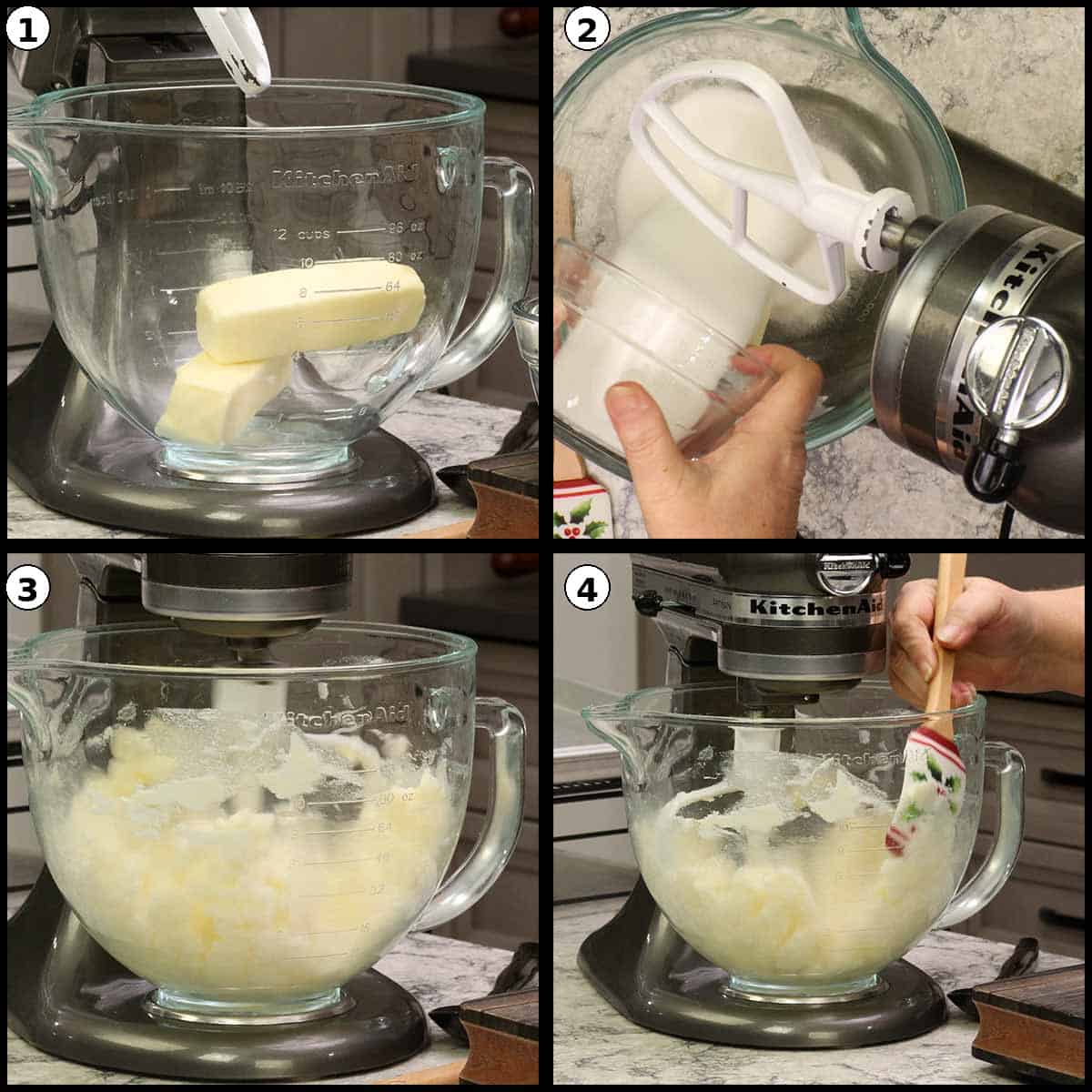
Scrape down the sides of the bowl, then increase to speed two until the mixture is more combined. Finally, increase to medium-high speed to whip air into the butter mixture until it's lighter and fluffier.
Quick Tip:
Don't overbeat the butter mixture. We want to incorporate air, but too much mixing will warm up the butter and lead to flatter cookies.
Step Two: Add the Eggs and Vanilla
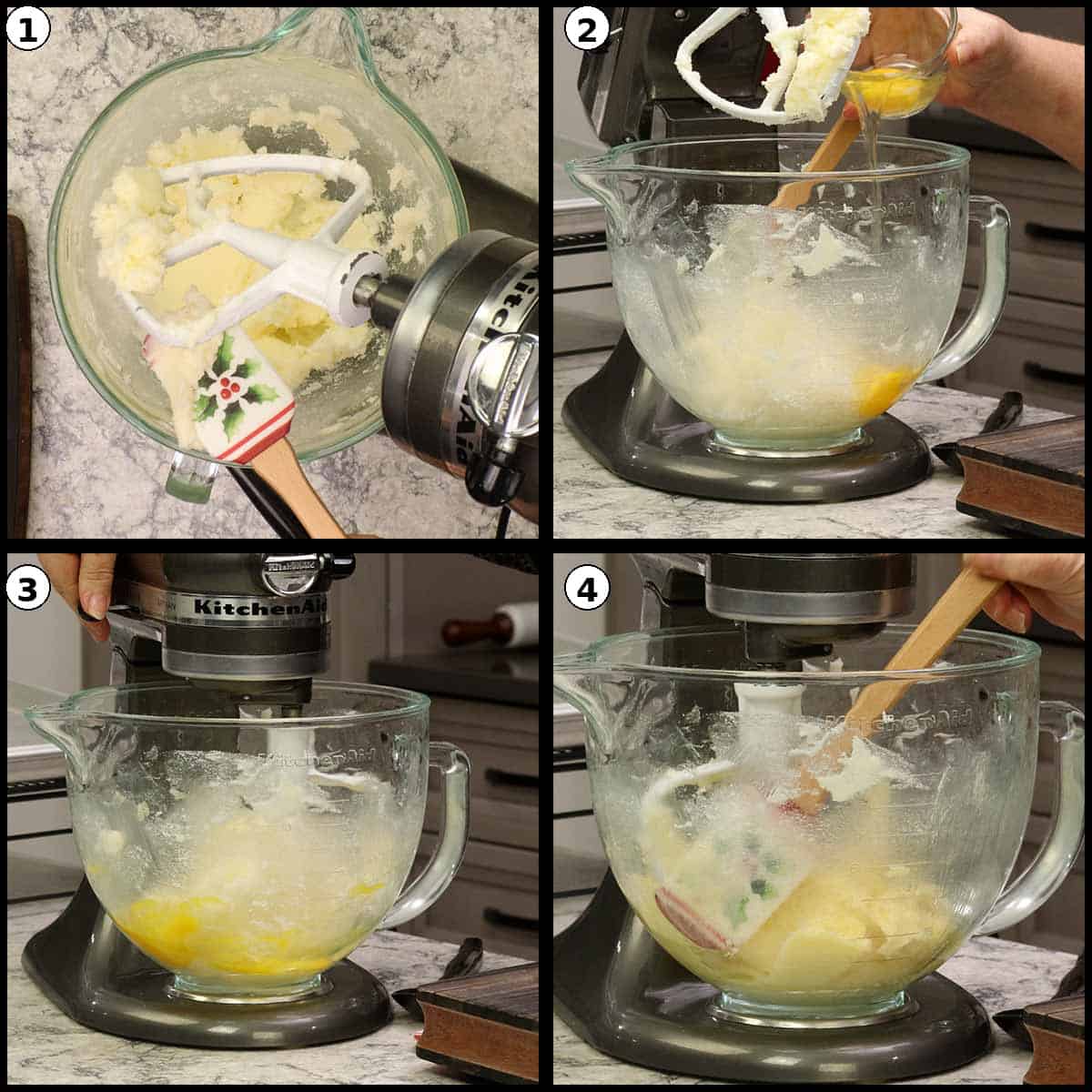
Crack your eggs into a separate small bowl first to avoid any shells getting into your dough. Add one egg at a time to the butter mixture, mixing on low speed until each is fully incorporated before adding the next.
After the second egg is incorporated, add one teaspoon of vanilla extract. Mix briefly, then scrape down the sides of the bowl. The mixture should look like a very loose dough at this point.
Step Three: Prepare the Dry Ingredients
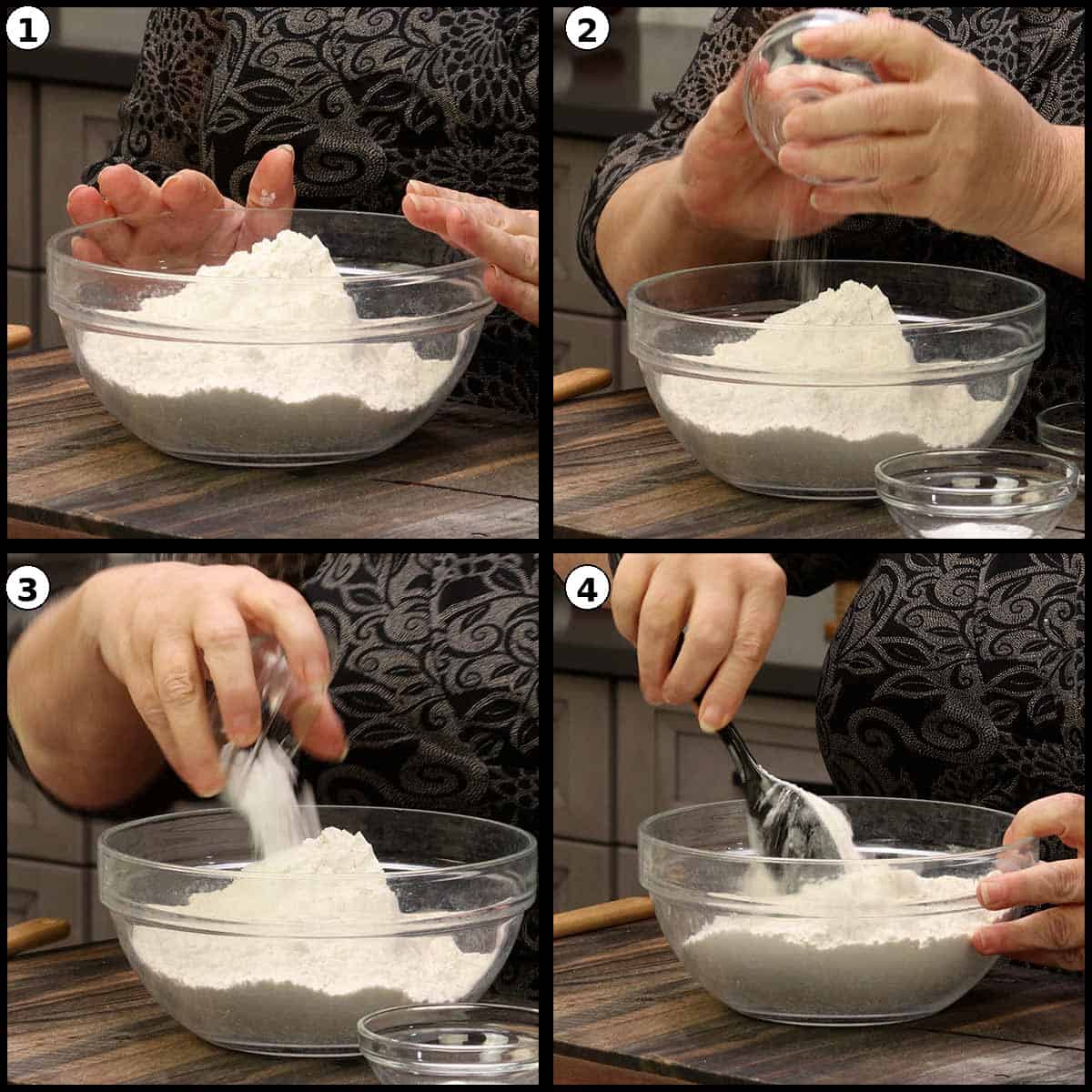
In a medium bowl, combine two and three-quarters cups of all-purpose flour, one-quarter teaspoon of salt, two teaspoons of cream of tartar, and one teaspoon of baking soda. Whisk or stir together to disperse the ingredients evenly throughout the flour.
Quick Tip:
Mixing the dry ingredients before adding them to the wet batter helps disperse the leavening agents evenly, so you don't end up with clumps of baking soda or cream of tartar in your cookie dough.
Step Four: Combine Wet and Dry Ingredients
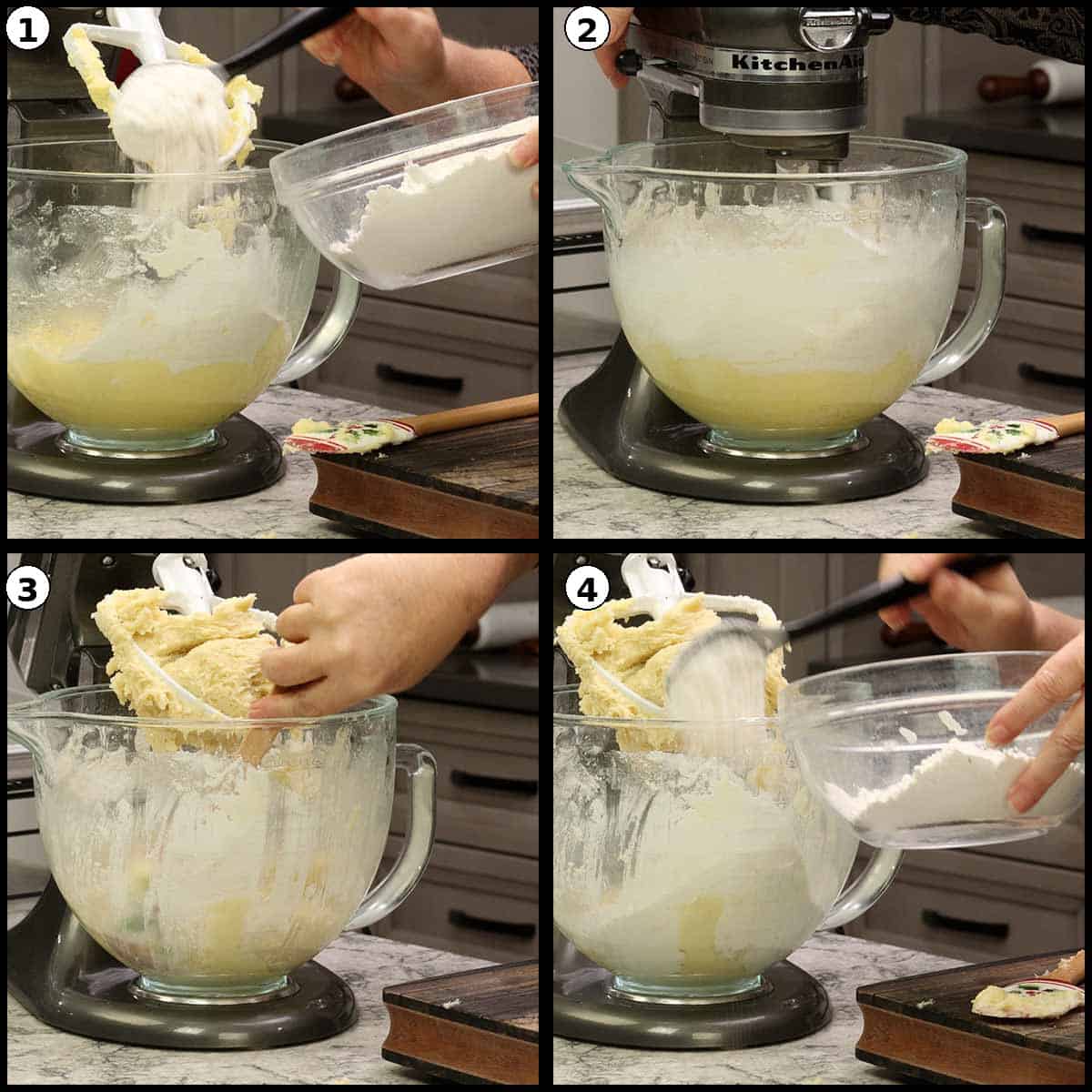
Add the dry ingredients to the wet ingredients about one-third at a time. Mix on low speed just until you don't see any flour in the cookie dough itself, the dough will get stiffer as you add more flour. Scrape down the sides between additions.
Quick Tip:
Do not overmix! When making cookies and quick breads, overmixing develops the gluten and leads to tough, rubbery cookies. Mix just until the flour is incorporated.
Step Five: Chill the Cookie Dough
Transfer the cookie dough to a smaller bowl if needed, cover with plastic wrap, and refrigerate for 30 minutes. While the dough chills, preheat your oven to 375℉/190℃ (or 400℉/200℃ if your oven runs cool).
The dough is chilled enough when it just slightly depresses when you push into it. If your finger sinks in, it needs more time.
Step Six: Make the Cinnamon Sugar Mixture
In a small bowl, combine one-quarter cup of white granulated sugar with four teaspoons of ground cinnamon. Mix well. This is more cinnamon sugar than many recipes call for, but we'll use some to top the cookies after baking for an extra boost of flavor.
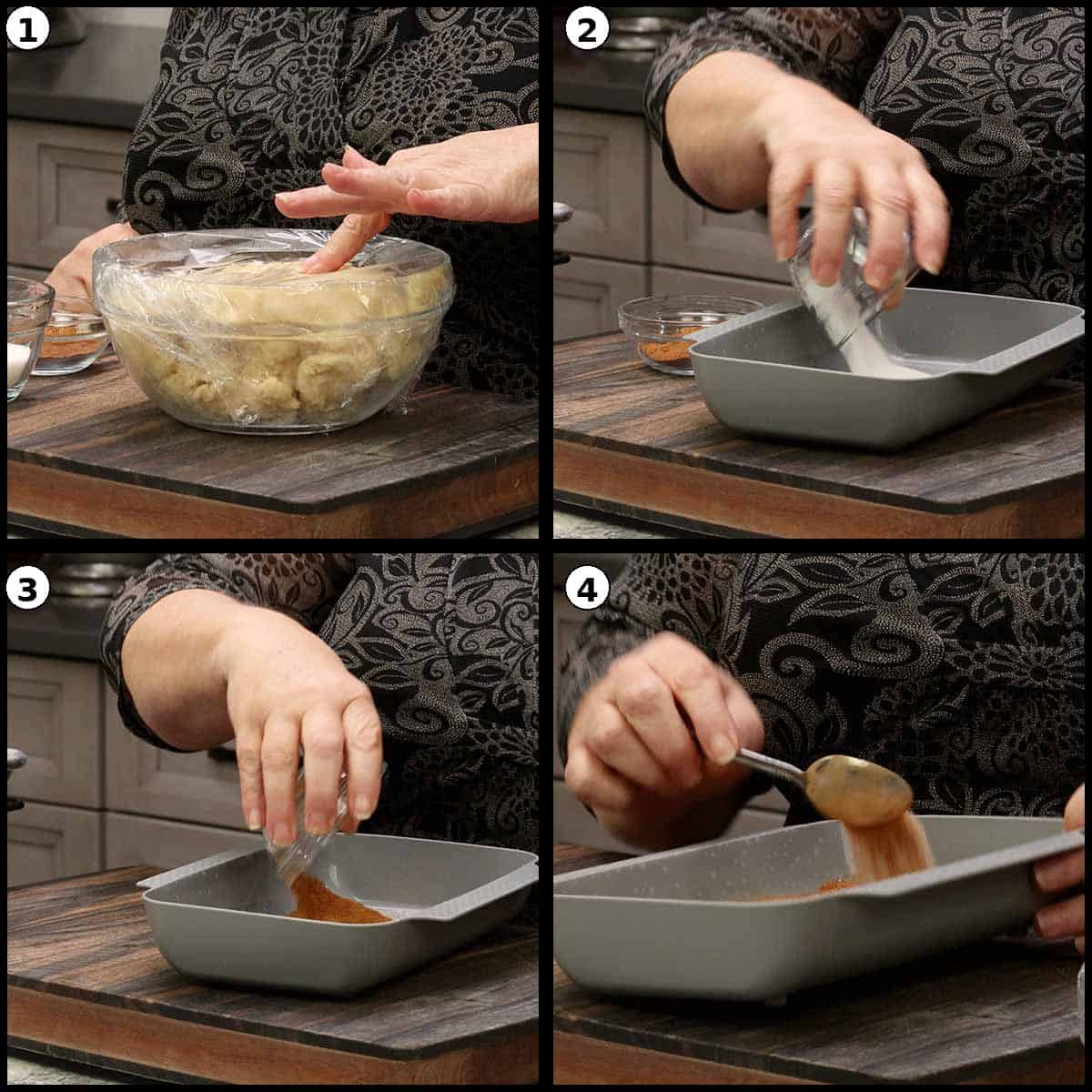
Quick Tip:
Chilling the dough gives you more time to work with it when rolling in cinnamon sugar, prevents cookies from spreading too flat, and helps create better crackling on top.
Step Seven: Shape and Coat the Dough Balls
Using a one-tablespoon cookie scoop or measuring spoon, portion out the cookie dough. Roll each portion lightly in your hands to form a ball—don't overwork them or they'll warm up too much.
Roll each dough ball in the cinnamon-sugar mixture until evenly coated. Place on prepared baking sheets lined with parchment paper, spacing about two inches apart. They don't spread a huge amount if made correctly, but they will spread a little.
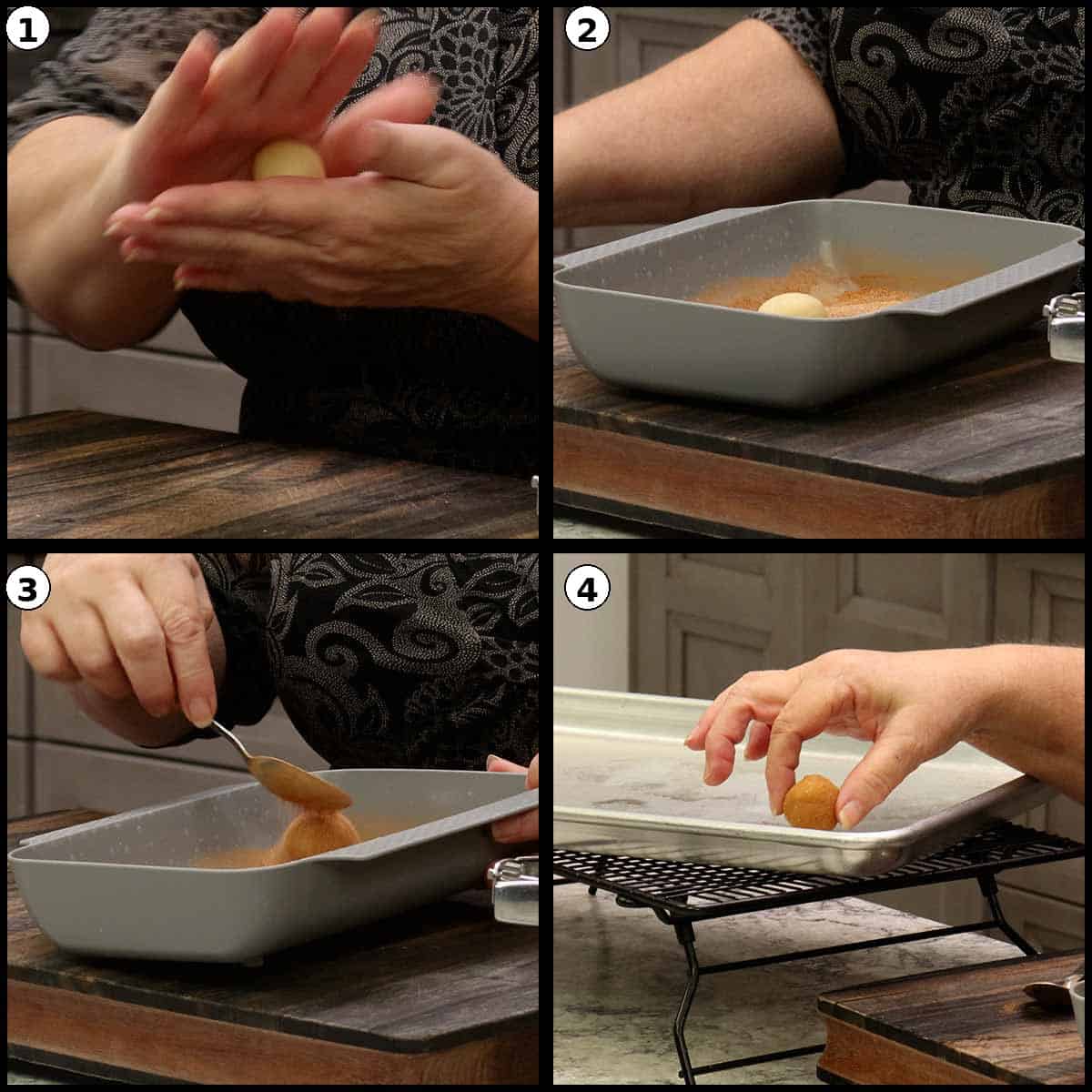
You can roll and toss multiple balls in the cinnamon sugar at one time. Place them on a cookie sheet 2" apart and into the oven when the cookie tray is full.
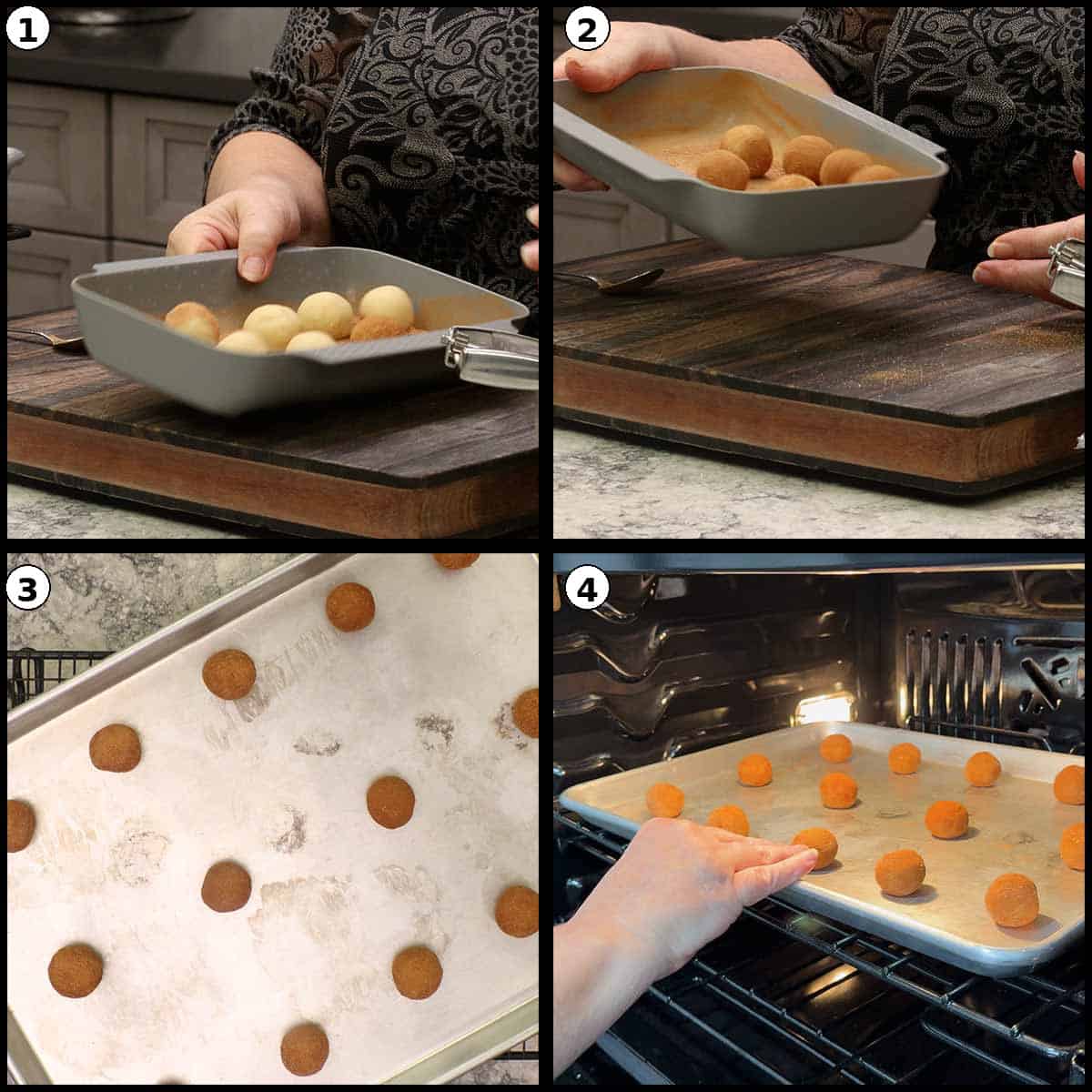
Quick Tip:
Use lighter-colored baking sheets for best results. Darker pans will cause the bottoms of the cookies to get too dark. If you only have dark pans, lower the oven temperature or reduce the bake time.
Step Eight: Bake the Cookies
Bake at 375℉/190℃ for 8-10 minutes. The cookies are done when the edges are set but the centers are still very soft. Don't wait until they look done, they continue to cook from residual heat after coming out of the oven.
After about five minutes, the cinnamon sugar on top may look very dark, this is normal. The sugar is melting and caramelizing. Do not open the oven door until at least six minutes into the bake time, as this can affect the rise and crackling.
Step Nine: Cool and Finish
Let cookies cool on the baking sheet for 1-2 minutes. While they're still warm, sprinkle a little extra cinnamon sugar on top of each cookie, it will melt into the warm cookie and add an extra layer of deliciousness.
Use a thin spatula with a sharp edge to transfer cookies to a wire rack. Let cool completely before storing. Cooling on a wire rack prevents overcooking and helps cookies set up properly without becoming soggy.
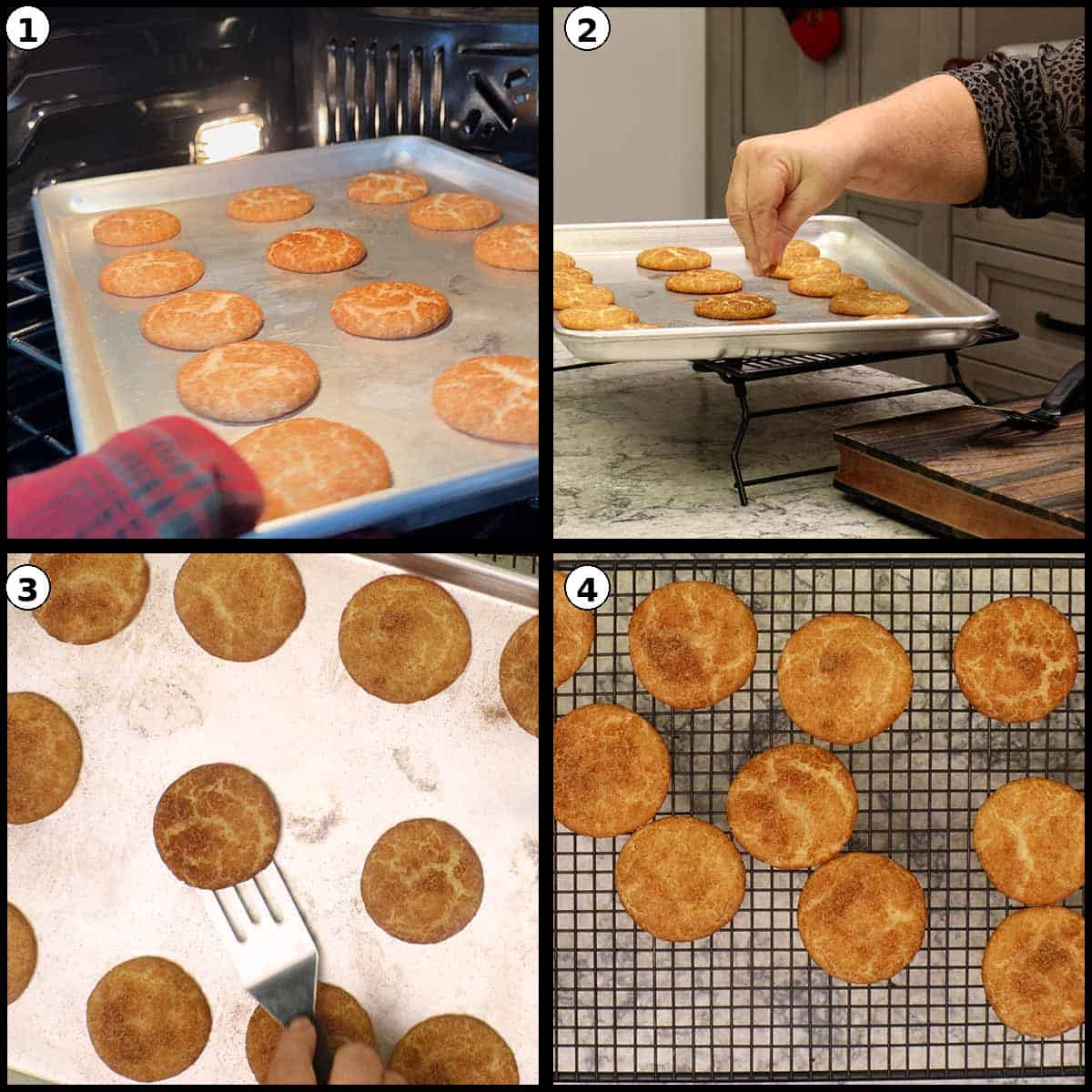
Quick Tip:
Let your cookie sheet cool completely before baking the next batch. If you put cookie dough on a hot tray, the cookies will start to melt and become too soft before they even get in the oven.
Variations
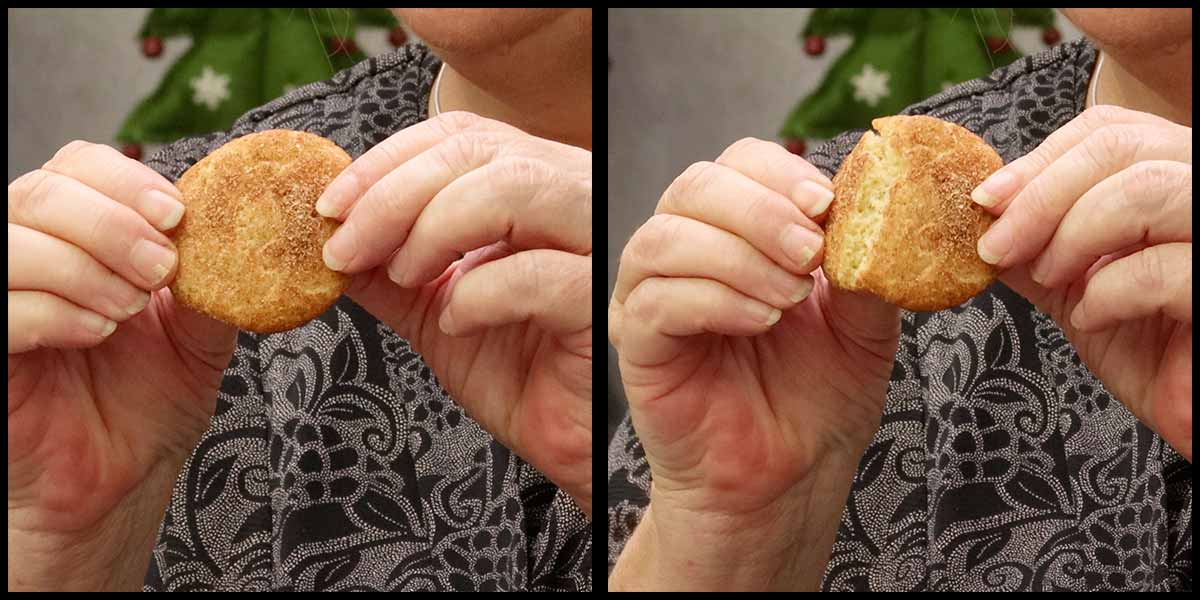
Adjusting Cookie Texture: If your cookies are too soft after baking, increase the oven temperature to 400℉/200℃. If they're spreading too flat, chill the dough (this can be done before or after they are rolled into balls).
Oven Temperature: The recipe calls for 375℉/190℃, but every oven is different. If you find your cookies aren't quite right at 375℉/190℃, try 400℉/200℃ for a slightly crispier cookie.
Using Multiple Racks: If you need to bake on multiple racks at once, rotate the trays halfway through baking (after the 6-7 minute mark) for even cooking. Be aware that heat flow will be different on each rack.
Storage Instructions
How to Store Snickerdoodle Cookies
Proper storage keeps your homemade snickerdoodles fresh and delicious. The most important thing is to let cookies cool completely before storing—if they're warm, they'll steam and become soggy.
Room Temperature
Store cookies in an airtight container at room temperature for up to one week. Layer cookies between sheets of parchment paper to prevent sticking.
Freezer
Snickerdoodles freeze beautifully. Let cookies cool completely, then freeze in a single layer on a baking sheet. Once frozen, transfer to an airtight container or freezer bag. Frozen cookies will keep for up to 3 months. Thaw at room temperature for about 30 minutes before serving.
You can also freeze the unbaked dough balls. Roll in cinnamon sugar, freeze on a baking sheet, then transfer to a freezer bag. Bake from frozen, adding 1-2 minutes to the bake time.
Quick Tip
Never stack or package warm cookies, they will steam and become soggy. Always let cookies cool completely on a wire rack before storing.
Aunt Kathy's Snickerdoodle Cookies
Ingredients
- 1 cup butter, room temperature salted preferred; should be soft enough to press into but not smushy
- 1½ cups white granulated sugar
- 2 large eggs, room temperature
- 1 teaspoon vanilla extract vanilla bean paste can be substituted
- 2¾ cups all-purpose flour
- ¼ teaspoon salt add extra pinch if using unsalted butter
- 2 teaspoons cream of tartar
- 1 teaspoon baking soda
- ¼ cup white granulated sugar
- 4 teaspoons ground cinnamon
Would you like to save this recipe?
Instructions
- Place 1 cup room temperature butter in the bowl of a stand mixer fitted with the paddle attachment. Add 1½ cups white granulated sugar. Start on low speed until butter breaks up and combines with sugar, forming larger clumps. Scrape down the sides, increase to speed two until more combined, then increase to medium-high speed to whip air into the mixture until lighter and fluffier.1 cup butter, room temperature, 1½ cups white granulated sugar
- Crack eggs into a separate small bowl first to check for shells. Add one egg at a time to the butter mixture, mixing on low speed until incorporated before adding the next. After the second egg, add 1 teaspoon vanilla extract and mix briefly. Scrape down the sides of the bowl.2 large eggs, room temperature, 1 teaspoon vanilla extract
- In a medium bowl, combine 2¾ cups all-purpose flour, ¼ teaspoon salt, 2 teaspoons cream of tartar, and 1 teaspoon baking soda. Whisk or stir together to evenly disperse the dry ingredients.2¾ cups all-purpose flour, ¼ teaspoon salt, 2 teaspoons cream of tartar, 1 teaspoon baking soda
- Add the dry ingredients to the wet ingredients about one-third at a time. Mix on low speed just until flour is no longer visible in the dough. Scrape down the sides between additions. Do not overmix.
- Transfer cookie dough to a bowl, cover with plastic wrap, and refrigerate for 30 minutes. While the dough chills, preheat your oven to 375℉/190℃. Make sure your oven rack is positioned in the center.
- In a small bowl, combine ¼ cup white granulated sugar with 4 teaspoons ground cinnamon. Mix well and set aside.¼ cup white granulated sugar, 4 teaspoons ground cinnamon
- Using a 1-tablespoon cookie scoop or measuring spoon, portion out the dough. Roll each portion lightly in your hands to form a ball, then roll in the cinnamon-sugar mixture until evenly coated. Place on light-colored baking sheets, spacing about 2 inches apart.
- Bake at 375℉/190℃ for 8-10 minutes. Cookies are done when edges are set but centers are still very soft. Do not open the oven door until at least 6 minutes into baking.
- Let cookies cool on the baking sheet for 1-2 minutes. While still warm, sprinkle a little extra cinnamon sugar on top of each cookie. Use a thin spatula to transfer cookies to a wire rack to cool completely before storing.
Notes
• Butter should be room temperature but not too soft—you should be able to press into MIXING TIPS
• Don't overbeat the butter mixture, too much mixing warms the butter
• Add eggs one at a time, mixing until just incorporated
• Add dry ingredients in thirds on low speed
• Mix just until flour disappears. Overmixing leads to tough cookies CHILLING TIPS
• Chill dough for 30 minutes for best results
• Chilled dough is ready when it just slightly depresses when pressed
• Chilling prevents excessive spreading and improves crackling BAKING TIPS
• Use light-colored baking sheets for best results
• Space cookies 2 inches apart
• Let cookie sheet cool completely between batches BAKING TIPS
• If cookies are too soft, increase oven temperature to 400℉/200℃
• Rotate baking sheet halfway through if you have oven hot spots STORAGE
• Room Temperature: Store in an airtight container for up to 1 week
• Freezer: Freeze baked cookies up to 3 months; thaw at room temperature
• Freeze unbaked dough balls for up to 3 months; bake from frozen adding 1-2 minutes NUTRITIONAL DISCLAIMER
Nutritional information provided is an estimate based on typical ingredient values and standard portion sizes. Actual nutritional content may vary significantly depending on specific brands used, ingredient substitutions, preparation methods, portion sizes, and individual cooking techniques. For precise nutritional information tailored to your specific ingredients and preparation, please consult with a registered dietitian or use laboratory analysis. This information should not be used for medical nutrition therapy or to manage medical conditions without professional guidance.
Nutrition
Frequently Asked Questions
Flat snickerdoodles are usually caused by butter that was too soft when creaming, not chilling the dough, or old baking soda. Make sure your butter is room temperature but still firm enough to just press into—it shouldn't smush. Chill the dough for 30 minutes before rolling, and use fresh baking soda.
You can skip it, but your cookies will taste like cinnamon sugar cookies rather than true snickerdoodles. Cream of tartar provides the signature tangy flavor that defines a snickerdoodle and also helps create the crackling top. I really recommend using it for authentic results.
Some recipes do substitute baking powder, but I've found the results aren't as good. The combination of cream of tartar and baking soda creates the best rise, fall, and crackling effect. For the best snickerdoodle cookies, use the cream of tartar and baking soda as written.
The cookies are done when the edges are set but the centers are still very soft. Don't wait until they look fully cooked—they continue to bake from residual heat after leaving the oven. The cinnamon sugar on top may look very dark, which is normal—it's just caramelizing.
If some cookies are getting darker than others, your oven has hot spots. To minimize this, rotate your baking sheet halfway through baking—but wait until at least the 6-minute mark so you don't interrupt the rising process. You can also try baking one tray at a time in the center of the oven.
This recipe makes about 60 cookies using a one-tablespoon cookie scoop. You'll need to bake in batches, swapping out your cookie sheets and letting them cool between batches.
Easy Cookie Recipes Everyone Loves
These classic snickerdoodles are perfect on their own, but here are some other great cookie recipes to complete your cookie tray.

About the Recipe Author, Louise Long
Louise is a full-time recipe creator and food blogger @ The Salted Pepper. She has over 30 years of experience with cooking and recipe development. She owned a restaurant for several years and was a full-time RN until retiring to blog full-time.

She published her first cookbook in the Fall of 2018 and is very interested in writing several more.
Louise is also the creator of an online Ninja Foodi Pressure Cooking Course with over 100 instructional step-by-step videos. People absolutely rave about the course and all the value they have received from it.
Louise has several very active Facebook groups that help people with the basics of cooking and learning more about the appliances they love.
Ninja Foodi Pressure Cooker & Air Crisper 101
Ninja Woodfire Outdoor Grill & Smoker
Louise is also a YouTube creator and you can find most of her recipes in video format on The Salted Pepper YouTube channel.
She is very responsive to messages and eager to help in any way she can. Get more Information about Louise & contact information
I WOULD LOVE TO SEE WHAT YOU ARE COOKING UP IN YOUR KITCHEN! TAG ME @THESALTEDPEPPER ON YOUR FAVORITE SOCIAL MEDIA PLATFORM WHEN YOU MAKE A DISH!
BE SURE TO FOLLOW THE SALTED PEPPER RIGHT HERE ⇓⇓⇓⇓⇓
Mona Todras says
Wondering if I can make cookies larger. Instead of 1 Tablespoons 2
Tablespoons?
Thank you
Louise Long says
You can but you will have to adjust your cooking time and maybe even the temperature.