

- Ninja Possible Cooker Pro (or any multi-cooker, slow cooker, large stockpot, or Dutch oven)
- Blender or Food Processor
- fine mesh strainer
- Wooden Spoon or Silicone Spatula
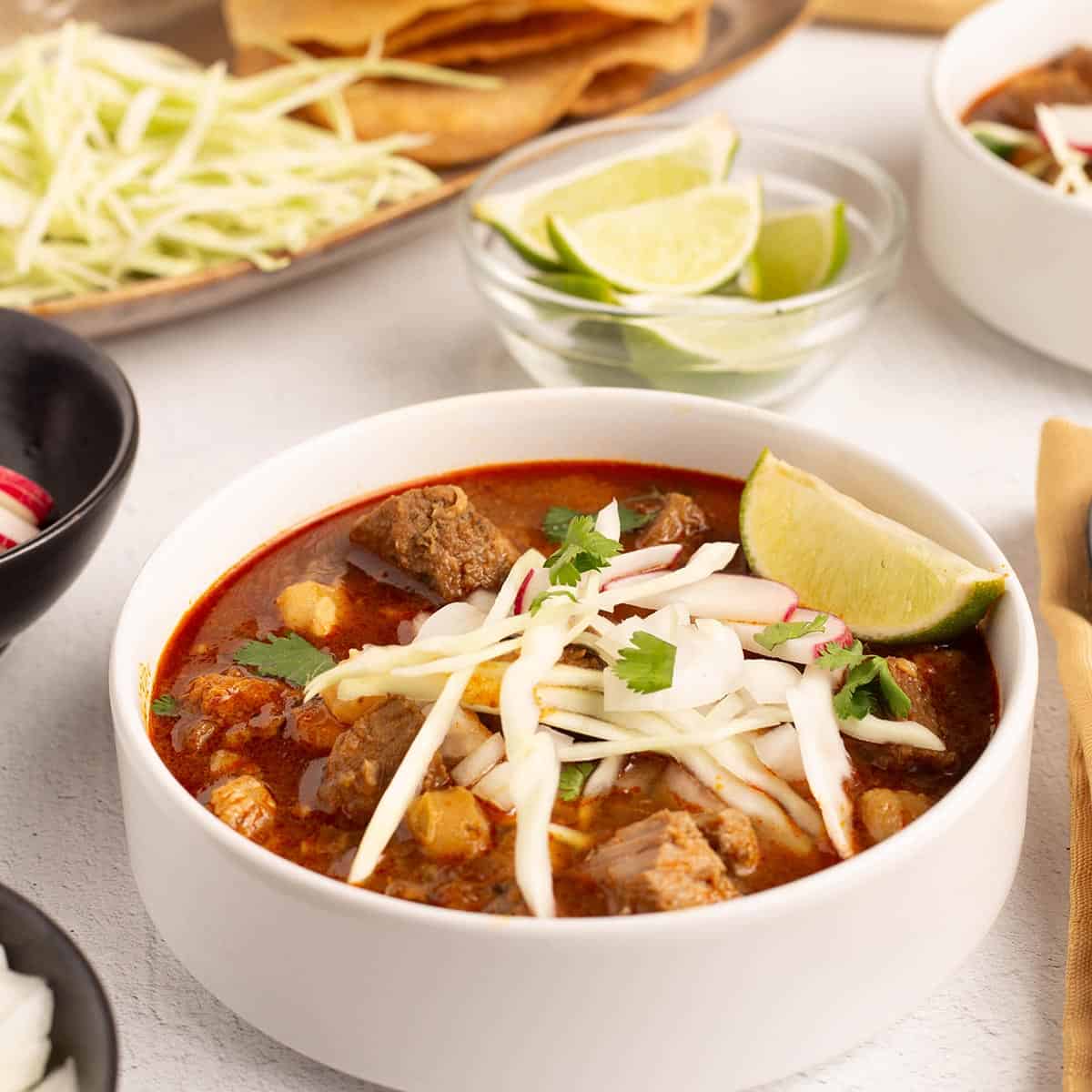
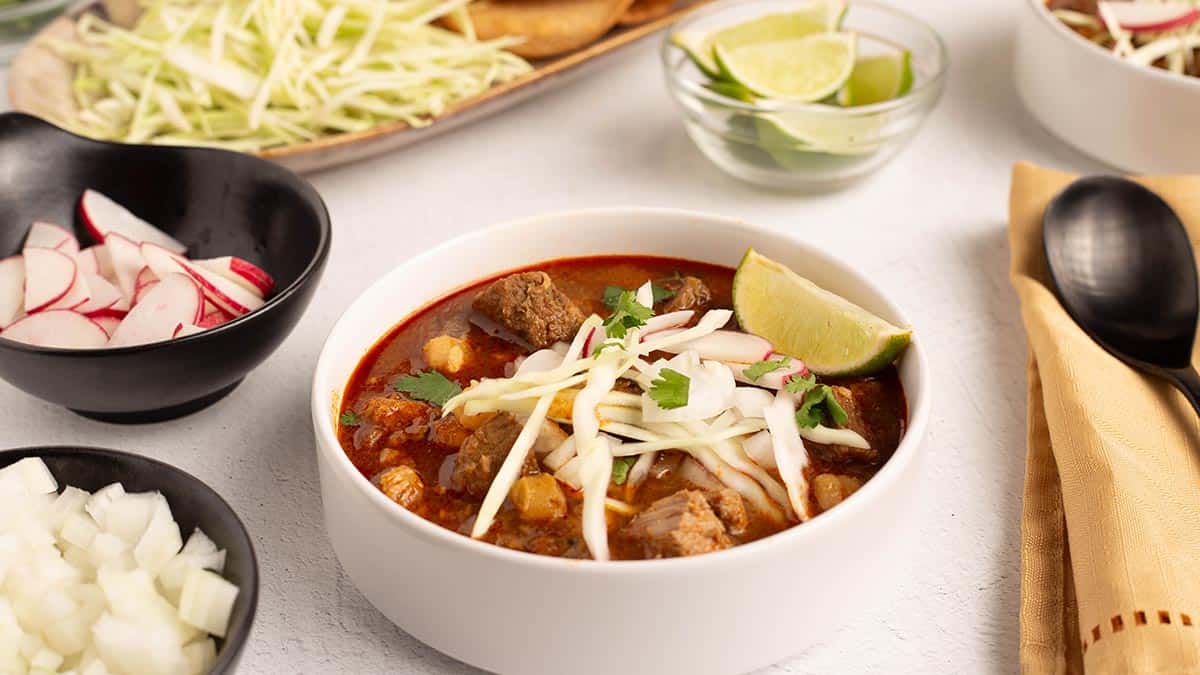
If you've ever tasted a steaming bowl of pork pozole rojo and thought it had to be a hard, all-day project to make at home, this easy pork pozole rojo recipe will completely change your mind. Made entirely in the Ninja Possible Cooker Pro using the Braise function, this traditional Mexican stew comes together with simple pantry ingredients, dried chiles, and a 3 to 4 pound piece of bone-in pork shoulder. The result is fork-tender pork in a rich, deeply flavored red chile broth with hominy, finished with all the classic toppings.
I first had pork pozole rojo when I was traveling in California, and I remember thinking it had to be a complicated soup to make to get that depth of flavor. It tasted like it had been simmering for days.
Well, I'm here to tell you it isn't complicated at all. A few hours in the Possible Cooker Pro and you have a big pot of soup that feeds a crowd, perfect for a cold day, family gatherings, or any special occasion when you want something that feels like a celebration in a bowl.
Would you like to save this recipe?
I'm using the Braise function on the Possible Cooker Pro for this recipe, but you can absolutely make it on the stovetop in a large stockpot or Dutch oven, in a slow cooker, or in a pressure cooker. The technique is the same, just adapt the time to the appliance. The flavor of the broth, the tender pork, and that gorgeous red chile color all come from the same simple ingredients and steps no matter how you cook it.
Suggested Kitchen Tools for Pork Pozole Rojo
- Ninja Possible Cooker Pro (or any multi-cooker, slow cooker, large stockpot, or Dutch oven)
- Sharp chef's knife
- Cutting board
- Cut-resistant gloves (optional, helpful when trimming pork)
- Blender or food processor
- Fine mesh strainer
- Large bowl (for catching the strained sauce)
- Wooden spoon or silicone spatula
- Ladle for serving
Ingredients & Substitutions
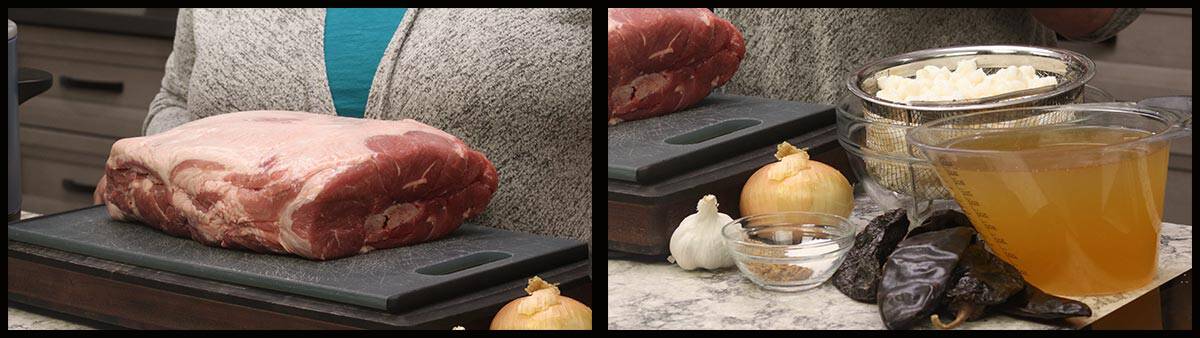
This pork pozole rojo uses just a handful of ingredients along with dried chiles, hominy, and a good piece of pork shoulder.
Bone-In Pork Shoulder
Used in Recipe: 3 to 4 pounds of bone-in pork shoulder, cut into 1½ to 2 inch cubes, plus the reserved bone. A typical bone-in pork shoulder weighs 7 to 8 pounds, so you'll have plenty left over for a roast or country style pork ribs.
What it Does: Pork shoulder is the most important ingredient in pozole rojo. It's the right balance of meat and fat to braise into perfectly tender pork without drying out. Adding the bone to the pot gives the broth a richer, more rounded flavor that really makes the pozole taste like it's been cooking all day. Sometimes called pork butt or Boston butt, it's the same cut, just a different name.
Substitutions: Boneless pork shoulder works well too. Add about 1 pound of pork spare ribs, or pork neck bones to the pot for the bone richness. Pork loin and pork tenderloin are too lean for this style of pozole and will dry out during the long braise. Stick with shoulder cuts.
Onion and Garlic
Used in Recipe: 1 large yellow onion plus 1 large bulb of garlic (top trimmed, cloves left in their skins) for the soup base. A second yellow or white onion, chopped, is used as a topping.
What it Does: The whole onion and garlic bulb cook together with the pork and chiles for the first hour, softening into the broth and infusing it with sweet, savory flavor. They get fished out and blended into the red chile sauce later, where they thicken and flavor the soup. Leaving the root end on the onion and the cloves in the bulb keeps everything in one piece so it's easy to retrieve from the hot broth.
Substitutions: White onion can be used in place of yellow. If your garlic bulbs are smaller, use 2 of them. There is no good substitute for fresh onion and garlic in this recipe. Both are essential to the flavor of the broth.
Dried Guajillo and Ancho Chiles
Used in Recipe: 4 dried guajillo chiles and 2 dried ancho chiles, stems and seeds removed. These are what give pork pozole rojo its signature red color and earthy, slightly fruity flavor.
What it Does: Guajillo chiles bring a bright, mildly tangy red chile flavor and the deep ruby color the broth is famous for. Ancho chiles add a slightly sweeter, raisin-like depth and a bit of richness. Together they create the layered red chile sauce that defines pozole rojo, without making the soup spicy. These are mild dried chiles, not hot ones.
Substitutions: You can adjust the ratio based on what you have. Use 6 guajillos with no anchos, or 4 anchos with 2 guajillos, both work beautifully. For a spicier red chile broth, add 1 or 2 chile de árbol with the milder chiles. Look for dried chiles in the international aisles of most grocery stores or at any Mexican grocery.
Chicken Broth
Used in Recipe: A total of 6 cups of chicken broth, divided. 4 cups go into the pot at the start with the pork and aromatics, and 2 cups are used cold to blend the chile sauce.
What it Does: Chicken broth gives the pozole a rounder, richer base than water alone and helps the broth taste like it's been simmering all day. Using cold broth in the blender keeps the blender cup safe when blending the hot cooked chiles, onion, and garlic.
Substitutions: Water can be used in place of chicken broth, though the broth will be less rich. Pork broth or beef broth can also be used. Homemade stock is fantastic here if you have it on hand.
White Hominy
Used in Recipe: 3 (15 ounce) cans of white hominy, drained and rinsed.
What it Does: Hominy is the soul of pozole. It's dried corn that has been soaked in an alkaline solution to remove the hull, giving it that distinctive chewy texture and slightly nutty flavor. The hominy soaks up the red chile broth as it simmers and adds the signature corn flavor that makes pozole rojo unmistakable. White hominy is most traditional, but yellow works too.
Substitutions: Yellow hominy or pozole-style hominy from any Mexican grocery works exactly the same. Dried hominy can be used if you cook it ahead of time according to the package directions. There's no real substitute for hominy in pozole. It is the dish.
Toppings and Garnishes
Used in Recipe: Shredded green cabbage, finely chopped onion, thinly sliced radishes, fresh cilantro, lime wedges, and crispy tostadas or tortilla chips. Crumbled cotija cheese is optional and absolutely delicious if you have it on hand.
What it Does: The toppings are what take pozole from soup to celebration. The shredded cabbage adds crunch and freshness, the radishes add a peppery bite, the chopped onion adds sharpness, and the lime adds the brightness that ties the whole bowl together. Cotija cheese adds a salty, briny finish if you like it.
Substitutions: Shredded iceberg or romaine lettuce can be used in place of cabbage. For a different take on the cabbage topping, try my Cilantro Lime Slaw on top of each bowl, the lime really brightens the broth. Skip the cilantro if you're not a cilantro person. Sour cream, sliced jalapeños, or sliced avocado are all wonderful additions if you want to expand the topping bar.
How to Make Pork Pozole Rojo in the Possible Cooker Pro
From start to finish, this pork pozole rojo takes about 30 minutes of active prep, 1 hour of initial braising, a quick step to blend the chile sauce, and 2 more hours of braising. You'll have a few hands-off hours to do other things while it simmers away. Here's exactly how to do it.
Mise En Place
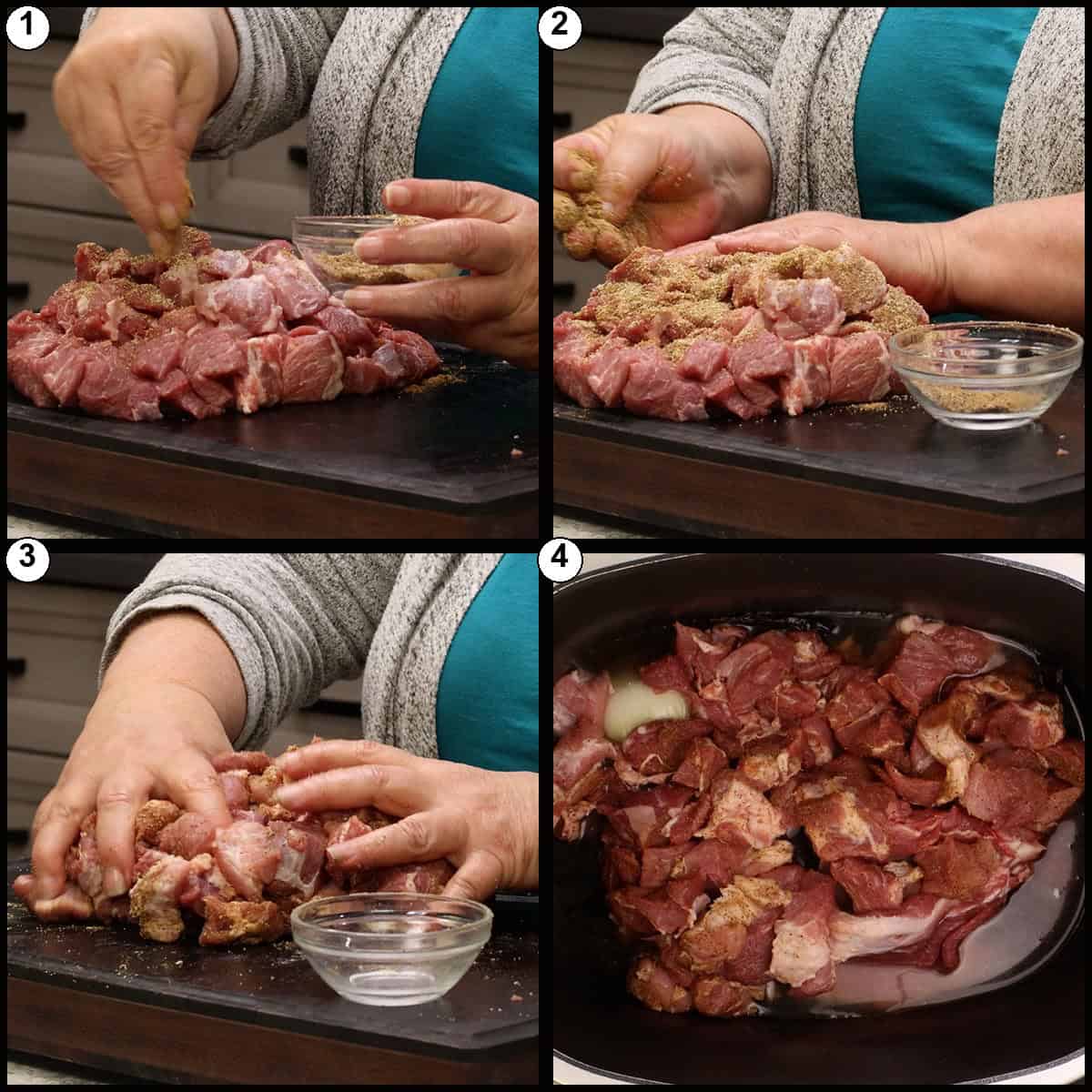
- Mix together the seasoning blend: 2 teaspoons cumin, 2 teaspoons fine grind sea salt, and 1 teaspoon black pepper. Sprinkle over the cubed pork and rub in gently.
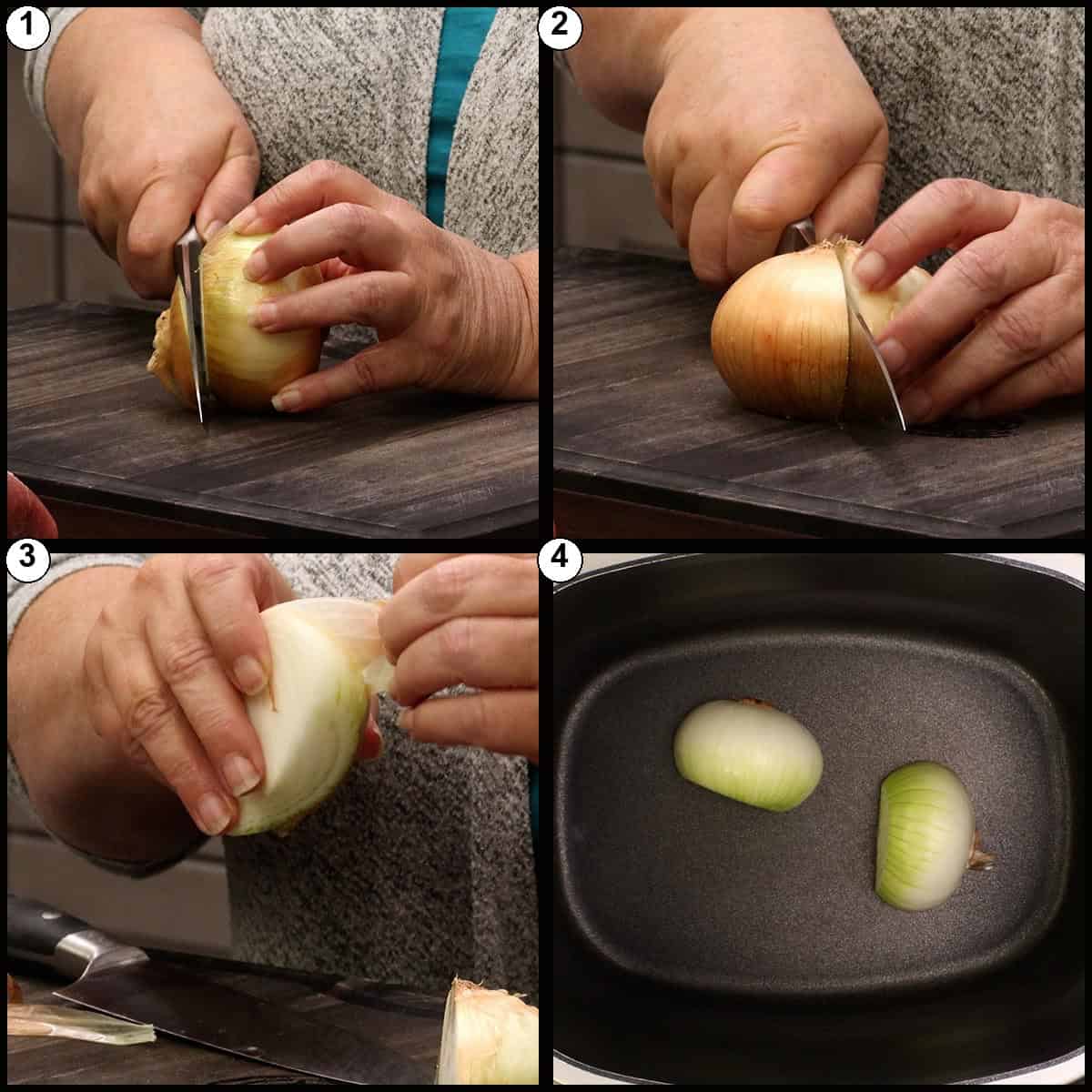
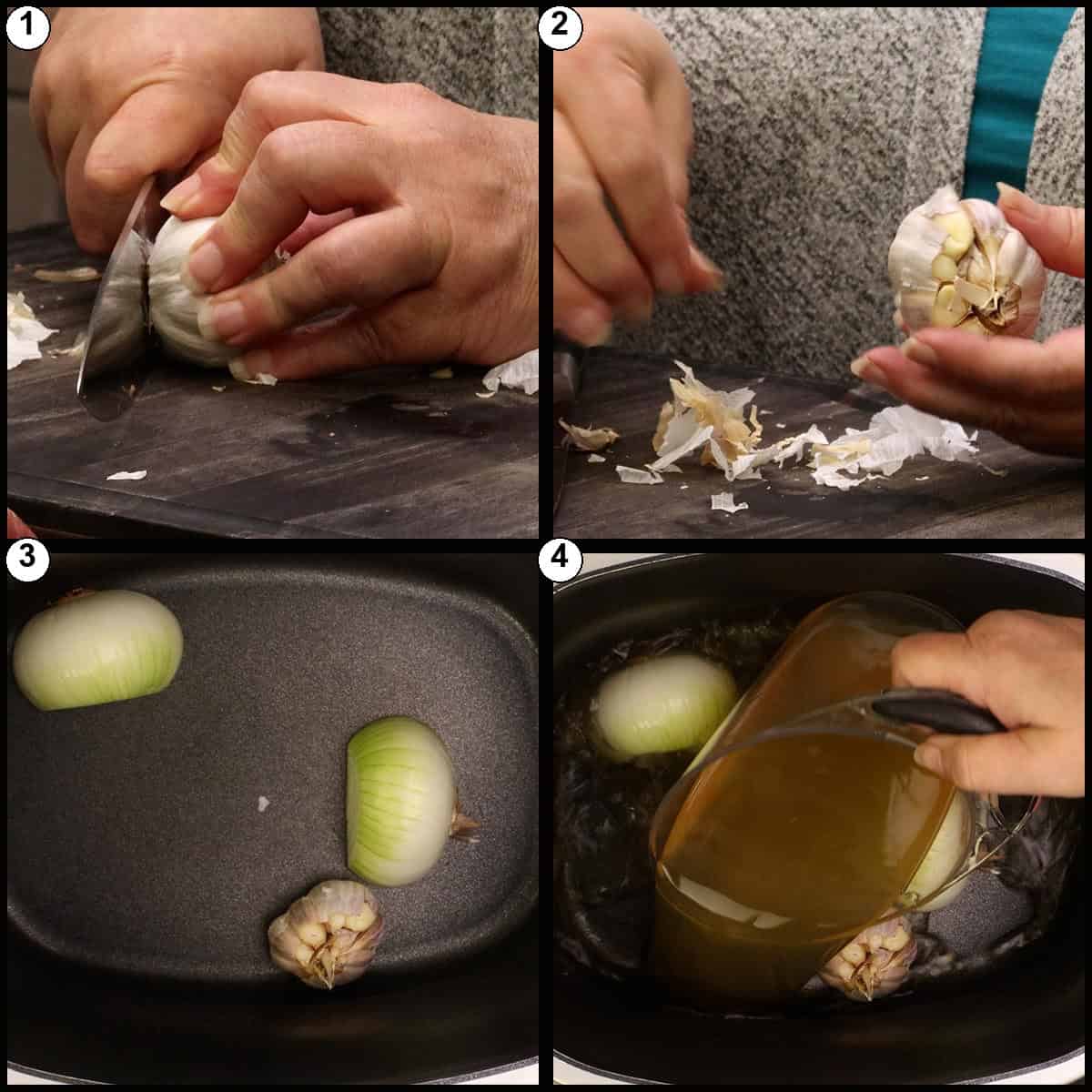
- Cut the stem end off 1 large yellow onion, peel the paper, and leave the root end intact.
- Trim the top off 1 large bulb of garlic and remove any loose papery skin. Leave the cloves attached to the bulb.
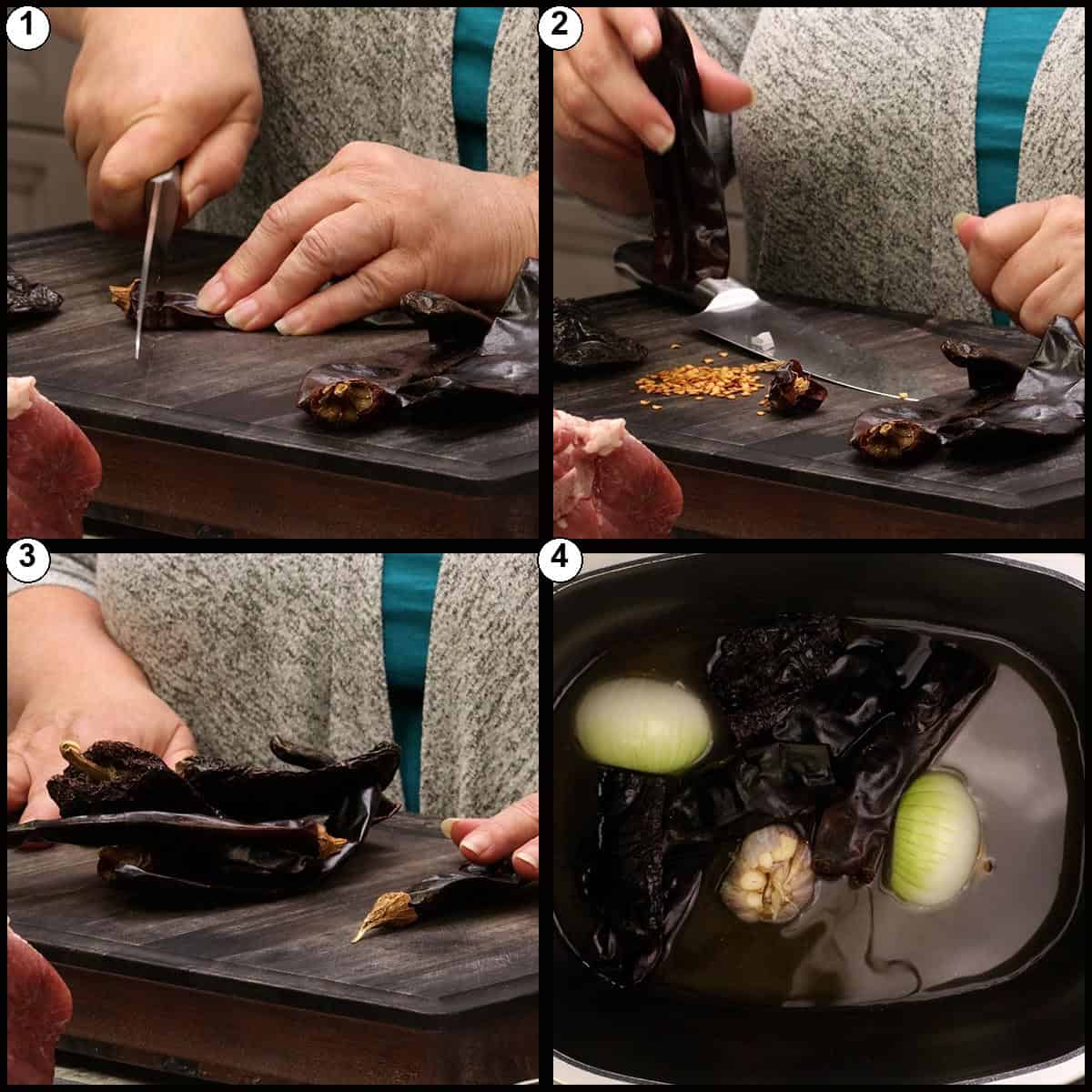
- Cut the stems off 4 dried guajillo chiles and 2 dried ancho chiles. Open each chile and shake out the seeds.
- Drain and rinse 3 (15 ounce) cans of white hominy. Set aside.
- Have 4 cups of chicken broth ready for the pot, and 2 more cups of cold chicken broth ready for blending the chile sauce later. Set aside 2 to 3 corn tortillas for the chile sauce.
- Prep your toppings: shredded cabbage, finely chopped onion, sliced radishes, chopped cilantro, and lime wedges. Have tostadas or tortilla chips and crumbled cotija cheese on hand if using.
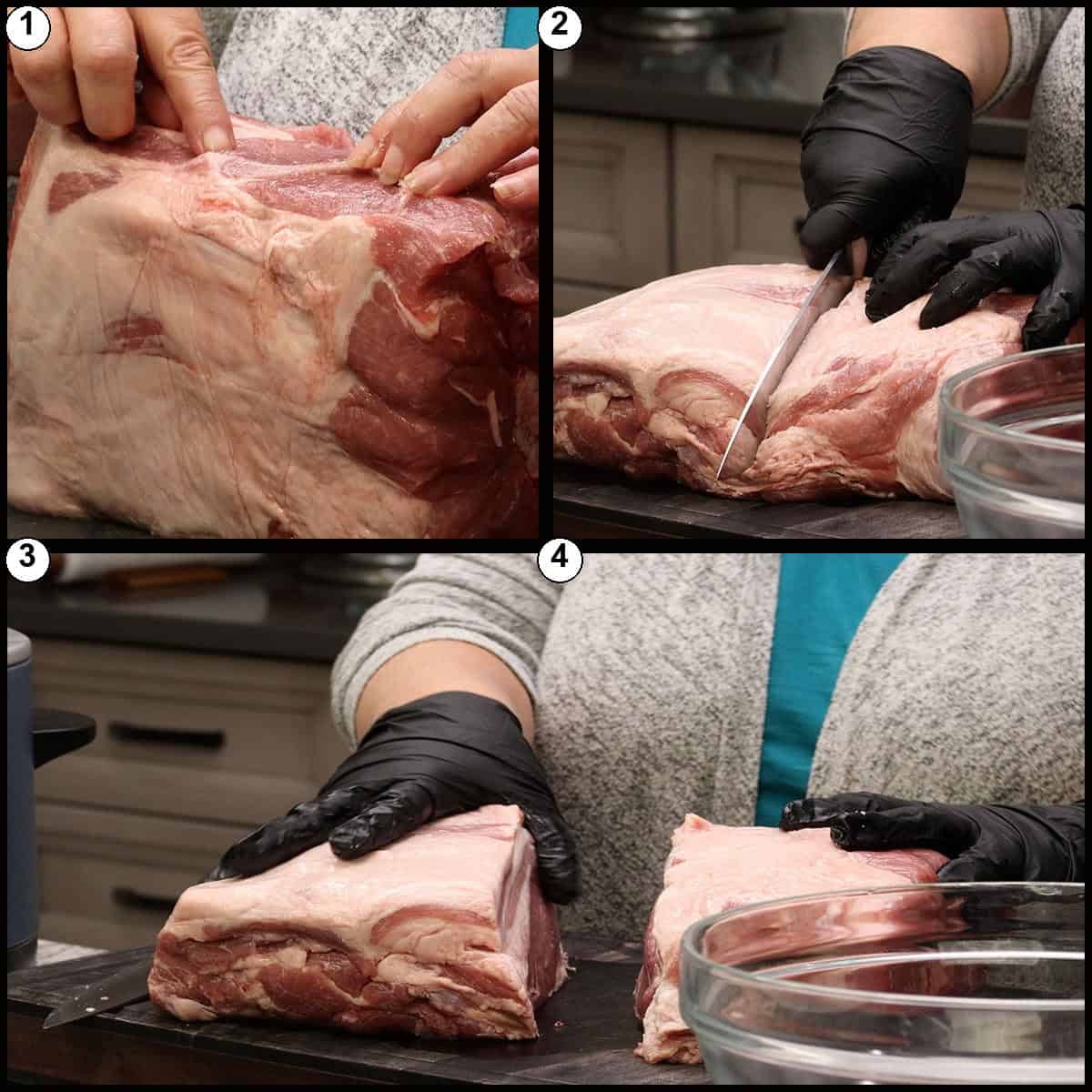
Prepare the Pork by cutting it in half just where the bone ends and use the bone in half of the pork for the soup. The boneless half can be used for a roast, pulled pork, or you can cut it into country style ribs.
Cut the pork meat off the bone and trim off any excessive fat and connective tissue, but leave some fat on the meat for the best flavor and texture. Cut the meat into bite-sized cubes. I like mine to be around 1½-inches.
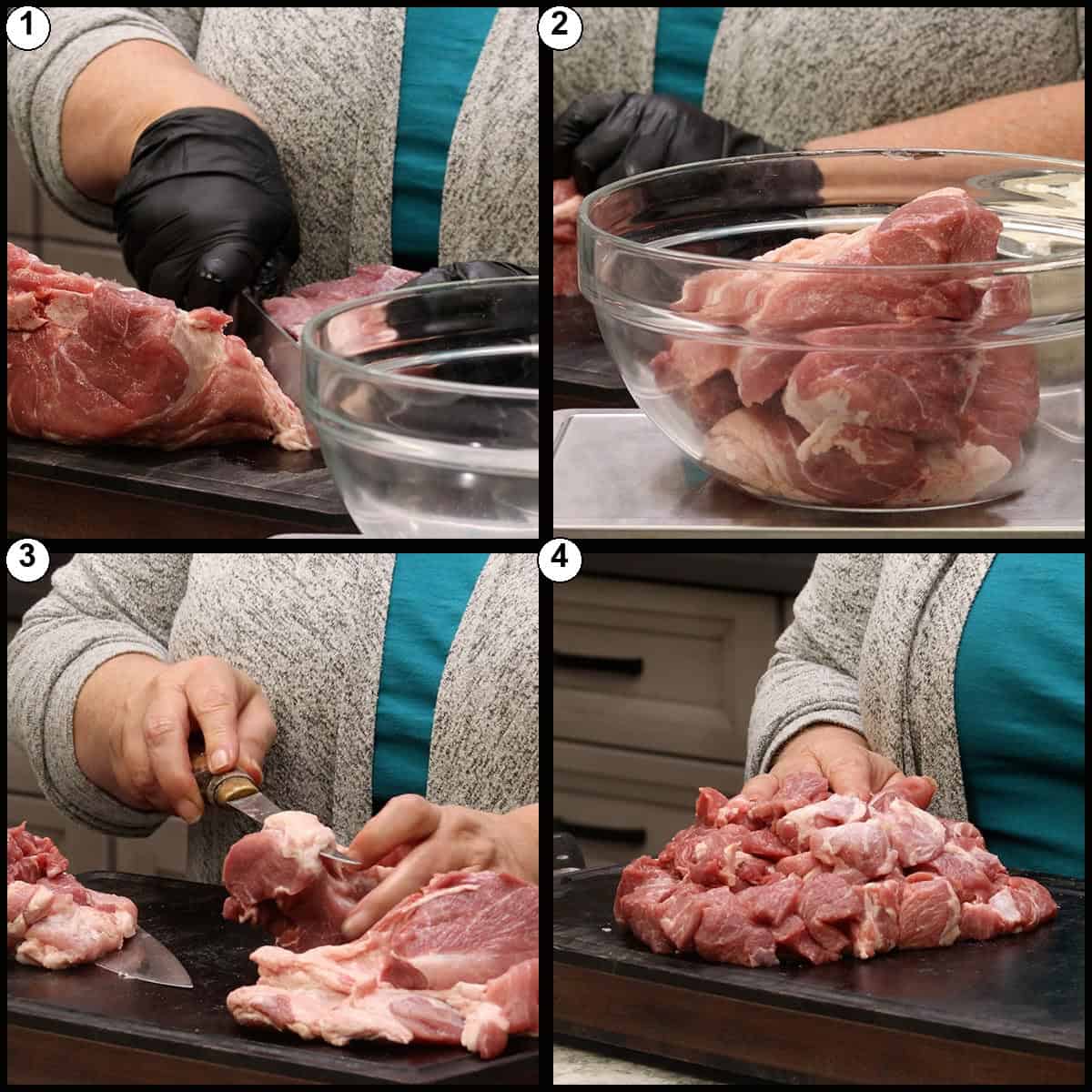
Sprinkle the seasoning blend over the cut up pork and mix it in until the cubes of pork are mostly coated with the meat.
Build the Pot
Place the whole onion, garlic bulb, and all of the chiles into the inner pot of the Possible Cooker Pro. Pour in 4 cups of chicken broth. Add the seasoned cubed pork along with the reserved pork bone. Stir gently to settle everything together. Don't worry if a few stray chile seeds end up in the pot, just don't dump them all in.
Add in the bay leaves (you'll see that I forgot in the video, but they should go in now).
First Hour of Braising
Place the lid on the Possible Cooker Pro, set the function to Braise, set the time to 3 hours, and press Start. We're only going to braise for 1 hour at this stage, then we'll pause to blend the chile sauce. The remaining 2 hours of braise time will continue after the sauce is added.
Quick Tip
Add the pork to the pot from the very beginning along with the chiles, onion, and garlic. I tested it both ways, and cooking everything together for that first hour gives the broth a much deeper flavor than blending the chile sauce ahead of time. Trust me on this one, it makes a real difference.
Blend the Red Chile Sauce
After the first hour, fish out the cooked onion, the whole garlic bulb, and all of the chiles. Place the onion on a cutting board, cut off the now-soft root, and drop the onion into a blender cup. Squeeze the softened garlic cloves out of their skins directly into the blender (they'll be hot, so be careful) and add the cooked chiles. Pour in 1 cup of cold chicken broth.
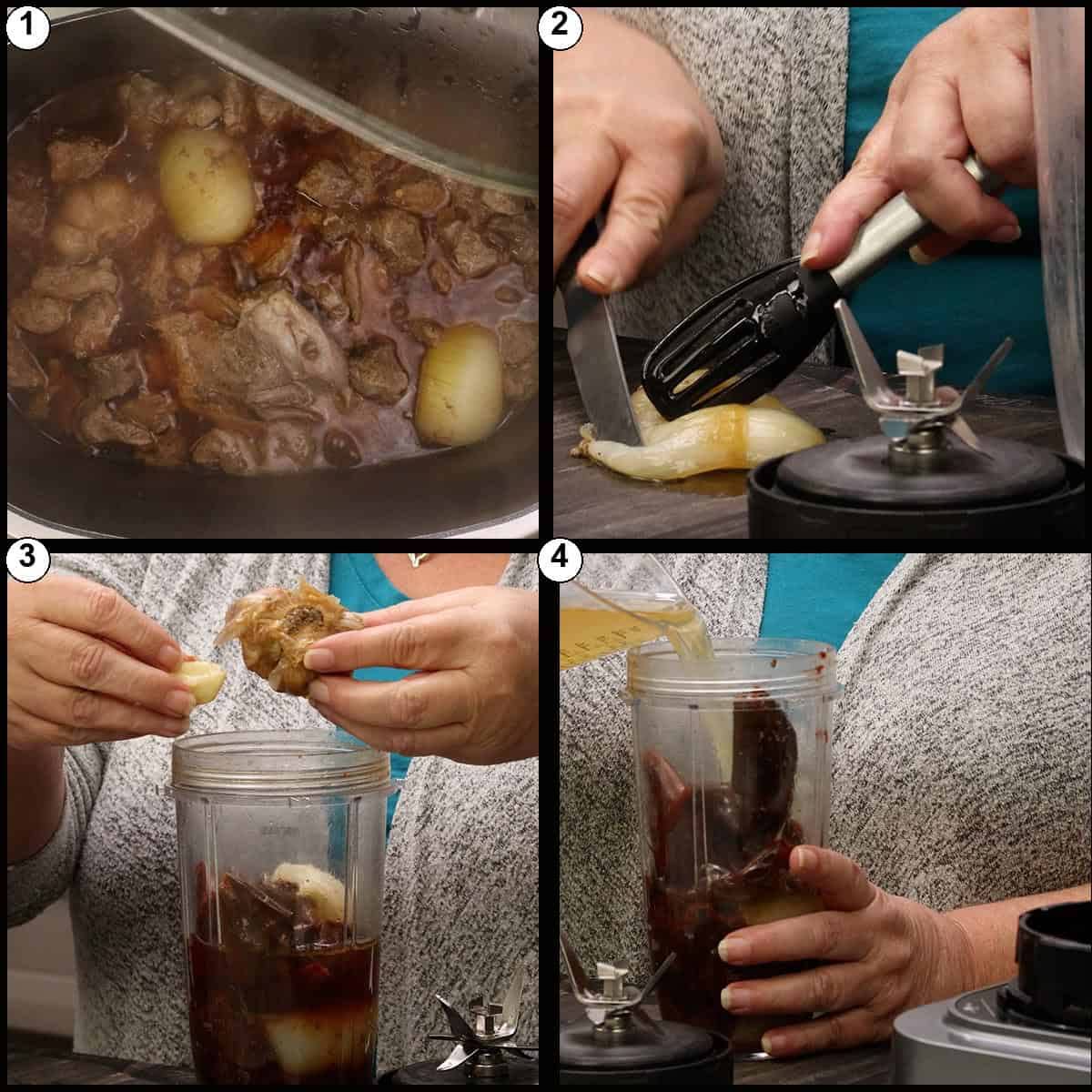
Add 2 to 3 corn tortillas, torn into pieces (if you are using them). Blend until completely smooth.
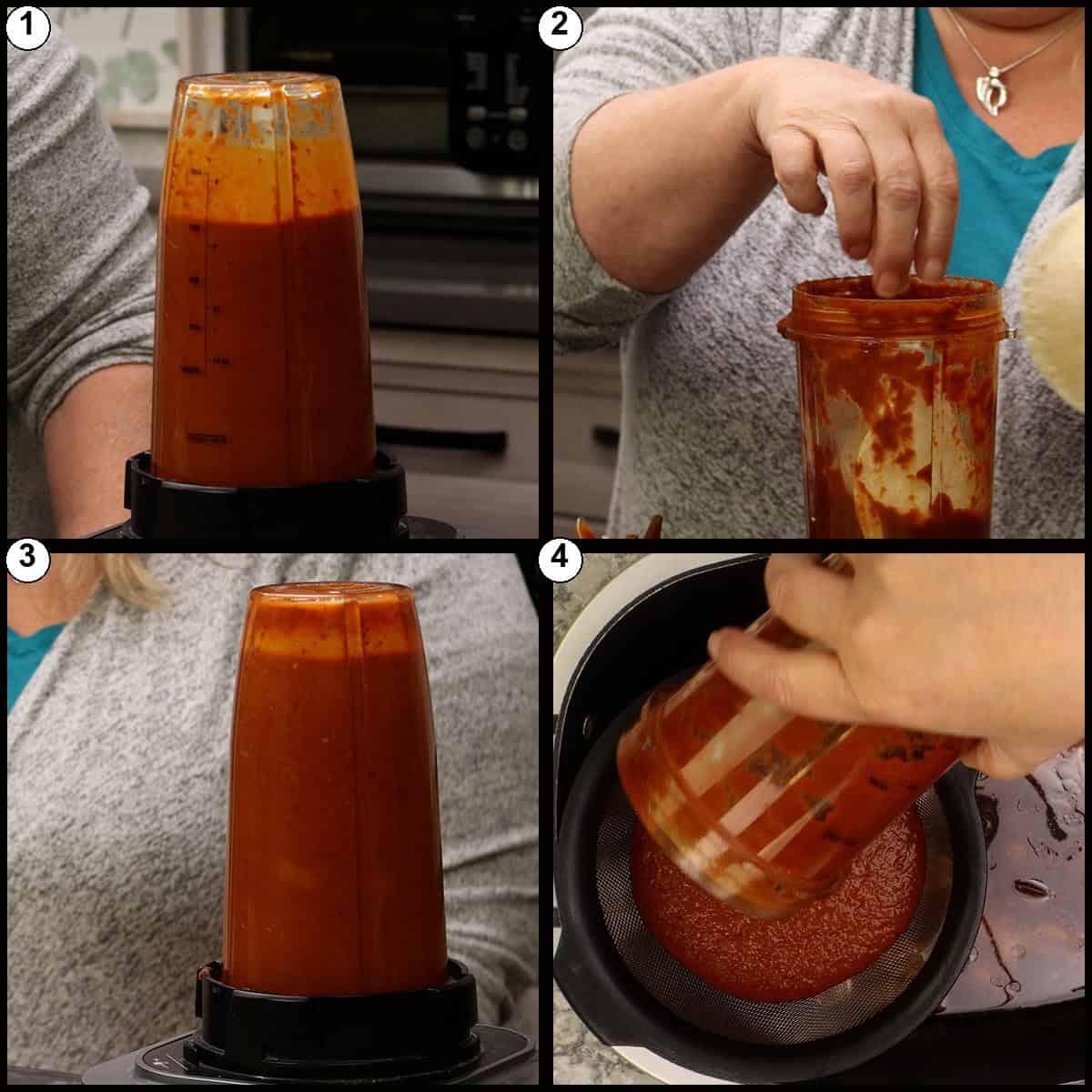
Strain and Add Back to the Soup
Pour the blended sauce through a fine mesh strainer set over a large bowl, working it through with a spatula. This step keeps any gritty residue from making it into the broth, and it really does make a difference in the final texture.
Use the remaining 1 cup of cold chicken broth to rinse the blender and finish straining the sauce. Pour the strained red chile sauce back into the pot with the pork.
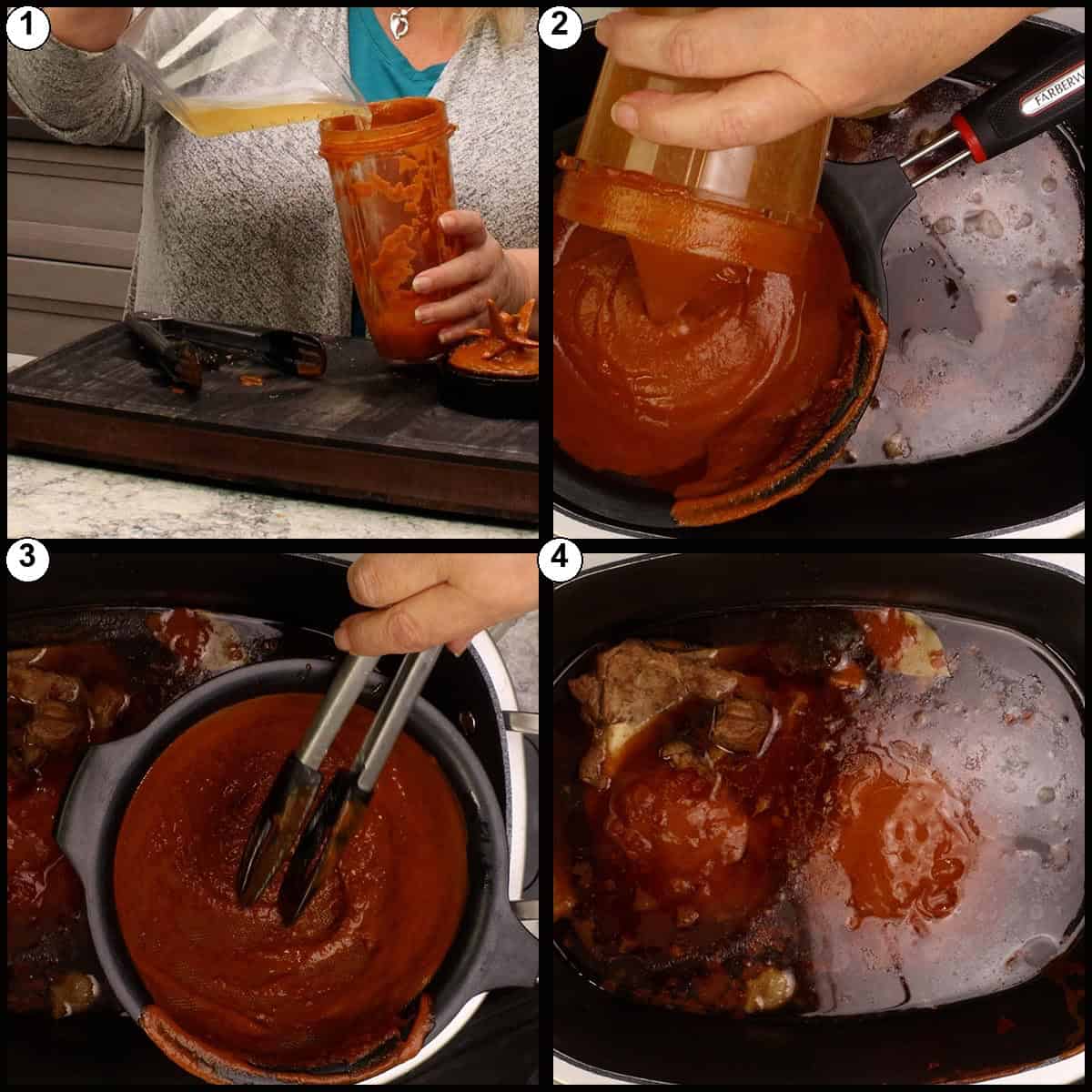
Quick Tip
Adding 2 to 3 corn tortillas to the chile sauce before blending is a small step that makes a big difference. The tortillas thicken the broth slightly and add a wonderful, subtle corn flavor that pulls the whole pot together. I've tested it with and without and I can absolutely tell the difference.
Add 2 bay leaves (if you forgot to before) and the drained, rinsed hominy. Stir gently to combine.
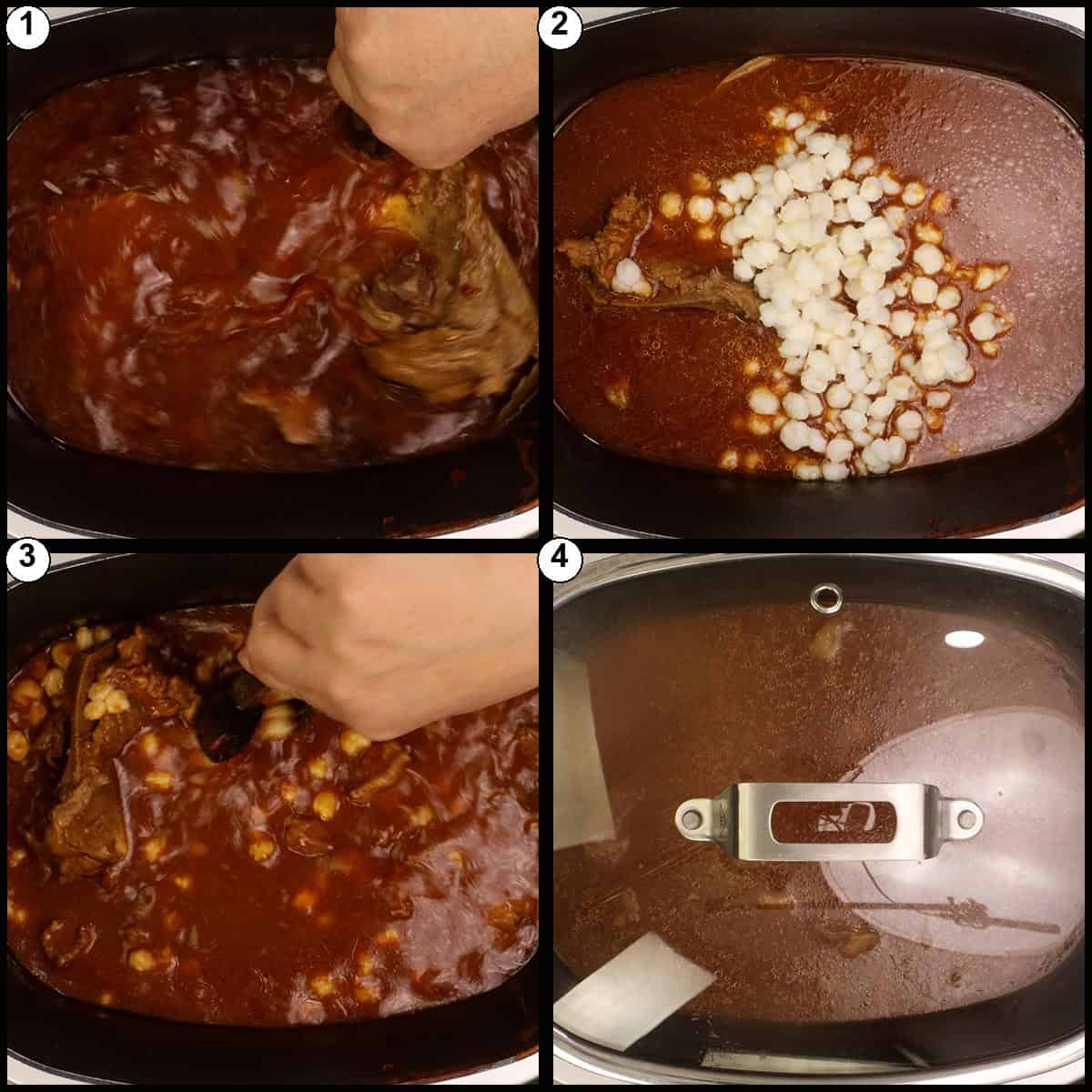
Finish the Braise
Place the lid back on and let the Possible Cooker Pro continue braising for the remaining 2 hours of the 3-hour timer. The pork will turn fork-tender, the broth will thicken and deepen in flavor, and the hominy will soak up all those gorgeous red chile flavors. If you need to step out, the Possible Cooker Pro will automatically switch to Keep Warm at the end of the cycle, and the pozole can sit on Keep Warm for several hours without overcooking.
Finish and Serve
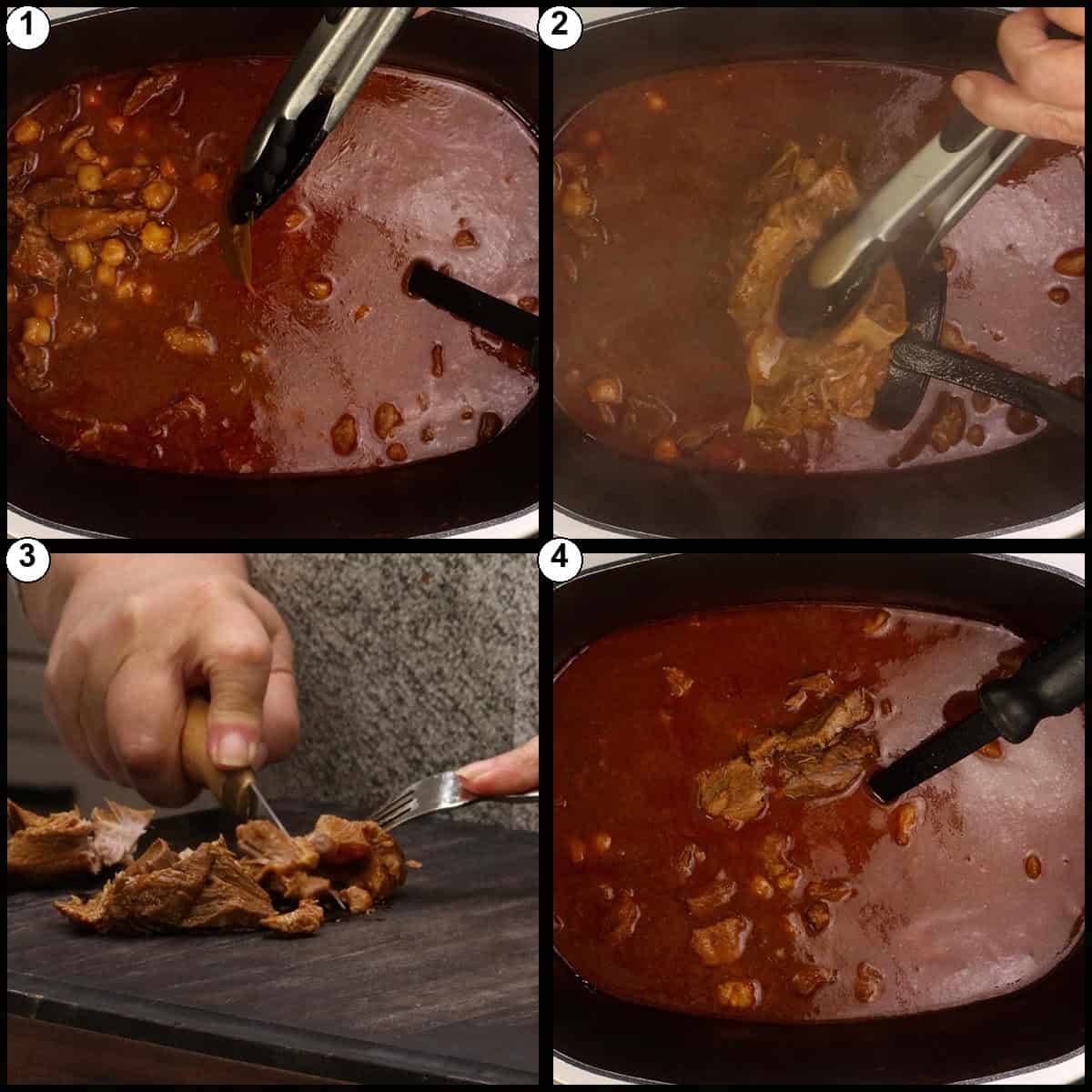
Once the braise is done, remove the bone with tongs. Pull off any meat that's still clinging to the bone (it will fall right off) and return that meat to the pot. Fish out the bay leaves and discard. Taste the broth and add a little more salt if needed.
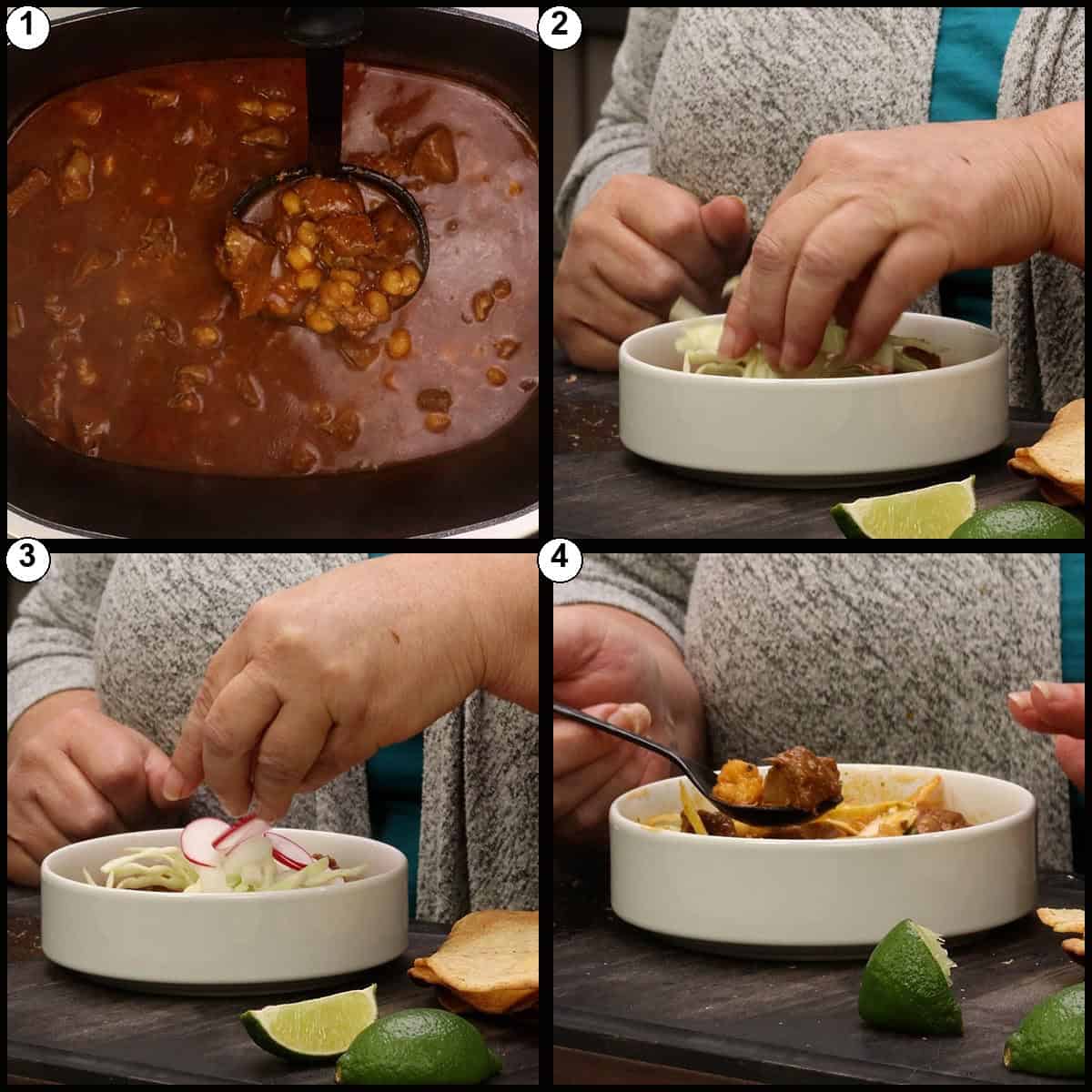
Ladle the pozole into bowls and let everyone build their own with the toppings: shredded cabbage, finely chopped onion, sliced radishes, fresh cilantro, a squeeze of lime, crispy tostadas, and a sprinkle of cotija cheese if you have it. Stir the cabbage in and let it soften for a minute in the hot broth before digging in.
If you want a refreshing drink alongside the pozole, my Cucumber Jalapeño Margaritas are perfect, the cool cucumber balances the rich red chile broth beautifully.

Pork Pozole Rojo (Possible Cooker)
Equipment
- Ninja Possible Cooker Pro (or any multi-cooker, slow cooker, large stockpot, or Dutch oven)
- Blender or Food Processor
- fine mesh strainer
- Wooden Spoon or Silicone Spatula
Ingredients
Seasoning Blend
- 2 teaspoon ground cumin
- 2 teaspoon fine grind sea salt or 1 teaspoon if using table salt
- 1 teaspoon black pepper
- 1 Tablespoon Mexican Oregano optional, don't use regular oregano
- 2 bay leaves
Soup Base
- 3-4 lbs bone-in pork shoulder, cut into 1½ to 2 inch cubes
- 1 large yellow onion peeled, stem cut off, root end intact cut in half
- 1 large bulb garlic top trimmed, loose paper removed, cloves left in skin
- 4 dried guajillo chiles stems and seeds removed
- 2 dried ancho chiles stems and seeds removed
- 6 cups chicken broth, divided 4 cups are used in the beginning and 2 cups are used when the peppers and veggies are blended.
- 2-3 corn tortillas optional but recommended; thickens the sauce slightly and adds a subtle corn flavor
- 3 (15 oz) cans white hominy drained and rinsed
Toppings
- 2 cups shredded green cabbage
- ½ cup yellow or white onion, finely chopped
- 4-6 radishes, thinly sliced adds a peppery note and crunch
- ¼ cup fresh cilantro, chopped skip if you are not a cilantro person
- 1 lime, cut into wedges a squeeze of lime over each bowl adds brightness and is highly recommended
- 6-8 tostadas or tortilla chips
- ¼ cup crumbled cotija cheese optional; adds a salty, briny finish
Would you like to save this recipe?
Instructions
- Cut the stem end off one yellow onion and peel the paper away, but leave the root end intact so the onion stays in one piece. Place the onion straight into the inner pot of the Possible Cooker Pro. Trim the top off the garlic bulb, peel away any loose papery skin (don't separate the cloves), and add the whole bulb to the pot and add in 4 cups of chicken stock.1 large yellow onion, 1 large bulb garlic, 6 cups chicken broth, divided
- Snap the stems off the dried guajillo and ancho chiles. Open each chile and shake out as many seeds as possible, removing any tough stem still attached at the top of the anchos. Drop all the chiles into the pot with the onion and garlic. A few stray seeds in the pot are fine, just don't dump them all in.2 dried ancho chiles, 4 dried guajillo chiles
- Trim the bone-in pork shoulder. Locate where the bone ends and cut straight down to separate a 3 to 4 pound section for the soup, reserving the rest for another meal. Remove the bone, leaving as much meat on it as you'd like, and reserve the bone to add to the pot for a richer broth. Cut the pork into 1½ to 2 inch cubes, leaving the fat layer on for flavor. Place the cubed pork in a large bowl, sprinkle with the cumin, fine grind sea salt, and black pepper, and rub the seasoning gently into the meat. Add to the pot with the pork bone. Stir.2 tsp ground cumin, 2 tsp fine grind sea salt, 1 tsp black pepper, 2 bay leaves, 3-4 lbs bone-in pork shoulder, cut into 1½ to 2 inch cubes, 1 Tablespoon Mexican Oregano
- Place the lid on the Possible Cooker Pro, set the function to Braise, set the time to 3 hours, and press Start. After 1 hour, move on to the next step. .
Blend the sauce
- After the first hour, fish out the cooked onion, the whole garlic bulb, and all of the chiles. Place the onion on a cutting board, cut off the now-soft root, and drop the onion into a blender cup. Squeeze the softened garlic cloves out of their skins directly into the blender (be careful, the bulb is hot). Add the cooked chiles. Pour in 1 cup of cold chicken broth and add 2 to 3 corn tortillas, torn into pieces.2-3 corn tortillas
- Blend on a smoothie or extract setting until the mixture is completely smooth. Pour the blended sauce through a fine mesh strainer set over a large bowl, working it through with a spatula to push the sauce through and leave the gritty pepper skins behind. Use the remaining 1 cup of cold chicken broth to rinse the blender and finish straining the sauce. Discard the solids left in the strainer.
- Pour the strained red chile sauce back into the pot with the pork. Add the drained and rinsed white hominy. Stir gently to combine.3 (15 oz) cans white hominy
- Place the lid back on, set Braise to 2 more hours (the original 3-hour timer should still be running with about 2 hours left), and let it cook undisturbed. The Possible Cooker Pro will switch to Keep Warm at the end of the cycle and the soup can sit on Keep Warm for several hours if needed.
- Once the braise is done and the pork is fork-tender, remove the bone with tongs. Pull off any meat still on the bone and return it to the pot. Fish out the bay leaves and discard. Taste the broth and add additional fine grind sea salt if needed.
- Ladle the pozole into bowls. Top each bowl with shredded green cabbage, finely chopped onion, sliced radishes, fresh cilantro, and a generous squeeze of lime. Serve with crispy tostadas or tortilla chips on the side and crumbled cotija cheese if desired. Stir the cabbage in and let it soften slightly in the hot broth before digging in.2 cups shredded green cabbage, ½ cup yellow or white onion, finely chopped, 4-6 radishes, thinly sliced, ¼ cup fresh cilantro, chopped, 1 lime, cut into wedges, 6-8 tostadas or tortilla chips, ¼ cup crumbled cotija cheese
Notes
• A standard bone-in pork shoulder weighs 7 to 8 pounds, which is more than you need for the soup. Cut it in half right at the end of the bone so you have a 3 to 4 pound piece for pozole and another piece you can use for a roast or for country style pork ribs.
• Leave the fat layer on for the soup, it renders down and adds a lot of flavor to the broth.
• You can prep and season the pork the day before, cover it, and refrigerate. Just bring it close to room temperature before adding to the pot.
• Leave the root end on the onion and the cloves attached on the garlic bulb so they stay intact during the first hour of cooking and are easy to fish out. CHILE TIPS
• Guajillo and ancho chiles are not spicy, they are mild and earthy. Don't be afraid of using both.
• Don't worry about exact chile counts. Smaller chiles, use more. Larger chiles, use fewer. You really cannot go wrong here.
• Lightly toast the chiles in a dry skillet for 30 seconds per side if you want a deeper, smokier flavor. This step is optional, the soup is wonderful without it.
• If your dried chiles are dusty, give them a quick rinse before adding to the pot.
• You can find dried guajillo and ancho chiles in the international aisles of most grocery stores or at any Mexican grocery. COOKING TIPS
• Add the meat to the pot at the beginning along with the whole onion, garlic bulb, and chiles. Cooking everything together for the first hour gives the broth and the chile sauce a much deeper flavor than blending the sauce ahead of time.
• The fine mesh strainer step is important for a smooth broth. Even a great blender will leave a little bit of pepper skin behind. VARIATIONS
• Boneless pork shoulder option: Use 3 to 4 pounds of boneless pork shoulder plus about 1 pound of bone-in pork (spare ribs or neck bones) for that essential richness from the bone. • Add chile de árbol: Add 1 or 2 chile de árbol with the guajillo and ancho for a spicier red chile broth.
• Add Mexican oregano: Stir in 1 teaspoon of dried Mexican oregano with the bay leaves for an extra herby note. I always add it and forgot in the video. Don't use regular oregano, if you don't have Mexican oregano skip it. SERVING SUGGESTIONS
• Pozole is meant to be a build-your-own bowl. Set out the cabbage, onion, radishes, cilantro, lime wedges, tostadas, and cotija cheese in small bowls and let everyone top their own.
• Stir the cabbage into the hot broth and give it a minute to soften slightly. The little bit of crunch alongside the tender pork is perfect.
• A squeeze of lime right before eating brightens the entire bowl. NUTRITIONAL DISCLAIMER
Nutritional information provided is an estimate based on typical ingredient values and standard portion sizes. Actual nutritional content may vary significantly depending on specific brands used, ingredient substitutions, preparation methods, portion sizes, and individual cooking techniques. For precise nutritional information tailored to your specific ingredients and preparation, please consult with a registered dietitian or use laboratory analysis. This information should not be used for medical nutrition therapy or to manage medical conditions without professional guidance.
Nutrition
Alternate Cooking Instructions
- Stovetop in a large stockpot or Dutch oven: Build the pot exactly as described, bring to a boil over medium-high heat, then reduce to a gentle simmer. Cover and simmer for 1 hour. Blend the chile sauce, return it to the pot with the bay leaves and hominy, and continue simmering on low for another 1½ to 2 hours until the pork is fork-tender.
- Slow cooker: Build the pot in the slow cooker insert and cook on Low for 4 hours. Blend the chile sauce, return it with the bay leaves and hominy, and continue on Low for another 3 to 4 hours, or on High for about 2 hours, until the pork is fork-tender.
- Pressure cooker: Build the pot in the pressure cooker, pressure cook on High for 20 minutes with a 10-minute natural release. Blend the chile sauce, return it to the pot, but DO NOT stir it in. Add the hominy, and pressure cook on High for another 15 minutes with a full natural release. The total cooking time is just over 1 hour, perfect for a weeknight craving.
Storage & Reheating Instructions
How to Store Leftover Pork Pozole Rojo
Let the pozole cool to close to room temperature before storing. Always store the toppings separately so they stay fresh and crisp.
- Refrigerator: Transfer cooled pozole to an airtight container and refrigerate for up to 4 days. The flavor actually gets better on day 2 as the chile broth continues to develop.
- Freezer: Pozole freezes beautifully. Cool completely, then transfer to airtight containers or freezer bags. Freeze for up to 3 months. Thaw overnight in the refrigerator before reheating.
Quick Tip
Pozole is a recipe that is great for leftovers. Make a big pot on Sunday and you'll have lunches and dinners for the rest of the week. Just reheat the broth and pork together and add fresh toppings each time you serve a bowl. The pork stays tender, the broth stays rich, and the toppings keep every bowl tasting fresh.
How to Reheat Pork Pozole Rojo
- Stovetop: Warm gently in a saucepan over medium heat, stirring occasionally, until heated through. Add a splash of chicken broth or water if the broth has reduced more than you'd like.
- Possible Cooker Pro: Return cold pozole to the pot, set to Slow Cook Low, and warm for 1 to 2 hours until heated through.
- Microwave: Place a single bowl in the microwave and heat in 60-second intervals, stirring between each, until heated through. Add a splash of broth if needed.
Frequently Asked Questions
Yes, you can. Boneless pork shoulder is convenient and still gives you tender pork after the long braise, but it won't give the broth the same depth of flavor. To make up for that, add about 1 pound of bone-in pork (spare ribs, neck bones, or pork ribs) to the pot for the entire cook. Pork ribs are my favorite option here because they fall apart cleanly and are easy to fish out at the end. Avoid pork loin and pork tenderloin, they are too lean for this style of pozole and will dry out.
Absolutely. Pozole is one of the most flexible recipes around. The stovetop in a large stockpot or Dutch oven is the most traditional method. Slow cookers work beautifully too, just plan for 8 to 9 hours total on Low. Pressure cookers like the Ninja Foodi cut the time down to just over an hour. The technique is the same in every appliance: build the pot, cook with the chiles for the first phase, blend and strain the sauce, then add the hominy and bay leaves and finish cooking. The full timing for each appliance is in the Alternate Cooking Instructions section.
Great question, and one I tested both ways. When you cook the pork, chiles, onion, and garlic together for the first hour, the chiles soften slowly while the pork seasons the broth. The chile sauce that comes out of the blender is layered, deep, and rounded. When I made the sauce ahead and added it to seared pork, the sauce tasted thinner and the broth was less complex. The fish-out-and-blend method takes one extra step but the flavor payoff is worth it. Trust me, the soup is so much better this way.
You can if you want a deeper, smokier flavor, but it's completely optional. Pozole rojo is wonderful without the toasting step. If you do want to toast, heat a dry skillet over medium heat and press each chile down for about 30 seconds per side, just until it puffs slightly and smells fragrant. Don't let them scorch or they'll turn bitter. I usually skip this step because the long braise extracts so much flavor from the chiles already.
This is my favorite little Louise twist on this recipe. Blending 2 to 3 corn tortillas into the chile sauce thickens the broth ever so slightly and adds a subtle, toasted-corn flavor that ties the whole pot together. I tested it both ways and you can absolutely taste the difference. It's a small thing that makes the broth feel a little more rich and finished. If you're avoiding corn tortillas, you can skip them and the soup is still delicious.
All three start with the same hominy and pork (or chicken) base. Pozole rojo gets its color and flavor from dried red chiles like guajillo and ancho, blended into a red chile sauce. Pozole verde uses roasted tomatillos, jalapeños or poblanos, and cilantro for a bright green broth. Pozole blanco skips the chile sauce entirely for a clean, white broth that lets the toppings do the flavoring. They are all delicious, just different personalities of the same beloved soup.
Variations
- Add chile de árbol for heat: Drop 1 or 2 chile de árbol into the pot with the guajillo and ancho for a noticeably spicier red chile broth.
- Add Mexican oregano: Stir 1 teaspoon of dried Mexican oregano into the pot with the bay leaves for an herby, slightly citrusy note.
- Use chicken instead of pork: Substitute 3 to 4 pounds of bone-in chicken thighs and cut the total cook time roughly in half. The chicken will be fall-off-the-bone tender in about 90 minutes total of braising.
- Use pork ribs: Use 3 to 4 pounds of pork spare ribs in place of cubed pork shoulder. The meat will be tender and easy to pull off the bones at the end.
Mexican-Inspired Recipes You Will Love
If you love the bold flavors in this pozole, you will love these other Mexican-inspired recipes too. Each one brings warmth and rich flavor to the table in a different way. Pick whichever sounds best, you really cannot go wrong with any of them.

About the Recipe Author, Louise Long
Louise is a full-time recipe creator and food blogger @ The Salted Pepper. She has over 30 years of experience with cooking and recipe development. She owned a restaurant for several years and was a full-time RN until retiring to blog full-time.

She published her first cookbook in the Fall of 2018 and is very interested in writing several more.
Louise is also the creator of an online Ninja Foodi Pressure Cooking Course with over 100 instructional step-by-step videos. People absolutely rave about the course and all the value they have received from it.
Louise has several very active Facebook groups that help people with the basics of cooking and learning more about the appliances they love.
Ninja Foodi Pressure Cooker & Air Crisper 101
Ninja Woodfire Outdoor Grill & Smoker
Louise is also a YouTube creator and you can find most of her recipes in video format on The Salted Pepper YouTube channel.
She is very responsive to messages and eager to help in any way she can. Get more Information about Louise & contact information
I WOULD LOVE TO SEE WHAT YOU ARE COOKING UP IN YOUR KITCHEN! TAG ME @THESALTEDPEPPER ON YOUR FAVORITE SOCIAL MEDIA PLATFORM WHEN YOU MAKE A DISH!
BE SURE TO FOLLOW THE SALTED PEPPER RIGHT HERE ⇓⇓⇓⇓⇓
Leave a Reply