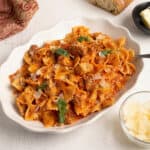
Parma Rosa Pasta with Chicken and Sausage
A creamy, one-pot Parma Rosa Pasta loaded with Italian sausage, tender chicken, and a velvety pink sauce made with crushed tomatoes, heavy cream, and parmesan cheese. Ready in under 30 minutes using your pressure cooker, this pasta dish is perfect for busy weeknights and guaranteed to impress at the dinner table.
Servings: 6 servings
Calories: 485kcal
Equipment
- Ninja Foodi Pressure Cooker (6.5 qt or 8 qt)
- Mixing/Chopping Tool or Wooden Spoon
- Measuring Cups and Spoons
- Cheese Grater or Microplane
- Cutting Board and Sharp Knife
Ingredients
- 2 tablespoon olive oil or any neutral cooking oil
- 12 oz Italian mild sausage, casings removed sweet, hot, or spicy sausage can be substituted
- 12 oz boneless skinless chicken breast, cubed into 1.5-inch pieces chicken thighs can be substituted
- 1 medium sweet onion, diced about 1 cup diced
- 1 tablespoon garlic, freshly minced about 6 cloves
- fresh basil stems optional, for added flavor; remove before finishing sauce
- 1½ teaspoon fine grain sea salt
- ½ teaspoon black pepper
- 1½ teaspoon dried basil
- 1 teaspoon dried oregano
- ¼ teaspoon dried rosemary
- 1 teaspoon dried thyme leaves
- 2 cups chicken stock chicken broth or bone broth can be substituted
- 8 oz bow tie (farfalle) pasta about 4 cups dry; penne pasta can be substituted (increase cook time to 3-4 minutes)
- 15 oz crushed tomatoes one 15 oz can
- 2 tablespoon tomato paste add more after cooking for a thicker sauce
- ½ cup heavy whipping cream half-and-half can be substituted for a lighter option
- 4 oz parmesan cheese, finely shredded about 1 cup finely shredded or 1½ cups pre-shredded
- red pepper flakes optional, for heat
- fresh basil leaves, for garnish
- shaved parmesan cheese, for garnish
Instructions
- Mix the seasoning blend together: 1½ teaspoons fine grain sea salt, ½ teaspoon black pepper, 1½ teaspoons dried basil, 1 teaspoon dried oregano, ¼ teaspoon dried rosemary, and 1 teaspoon dried thyme leaves. Set aside. Remove sausage from casings. Cube chicken breast into 1.5-inch pieces. Dice onion into ¼-inch pieces. Mince garlic.½ tsp black pepper, 1½ tsp dried basil, 1 tsp dried oregano, ¼ tsp dried rosemary, 1 tsp dried thyme leaves, 1½ tsp fine grain sea salt
- Set pressure cooker to Sear/Sauté on High. Add 2 tablespoons of olive oil and let it heat up.2 tbsp olive oil
- Add the sausage (casings removed) to the hot oil. Break it up into desired-size pieces using a mixing chop tool or wooden spoon. Cook until no pink remains (about 50% cooked through), approximately 5-6 minutes. The sausage will not break up further once under pressure, so get it to your preferred size now.12 oz Italian mild sausage, casings removed
- Add the diced onion and cubed chicken to the pot. Sprinkle half of the seasoning blend over the chicken. Stir and cook for 3-4 minutes until the chicken starts to get some color.12 oz boneless skinless chicken breast, cubed into 1.5-inch pieces, 1 medium sweet onion, diced
- Add the minced garlic and stir. Add basil stems if using for extra flavor. Stir garlic for about 30 seconds until fragrant. Do not add garlic too early or it will burn.1 tbsp garlic, freshly minced
- Pour in 2 cups of chicken stock. Stir and scrape the bottom of the pot to loosen any bits stuck to the bottom. This prevents a burn notice during pressure cooking.fresh basil stems, 2 cups chicken stock
- Add 8 ounces of bow tie pasta to the pot. DO NOT STIR from this point forward. Pour 15 ounces of crushed tomatoes on top of the pasta. Sprinkle the remaining seasoning blend over the top. Add 2 tablespoons of tomato paste on the surface. Gently push any pasta poking out below the liquid, but do not stir.8 oz bow tie (farfalle) pasta, 15 oz crushed tomatoes, 2 tbsp tomato paste
- Close the lid and set the pressure valve to Sealed. Set to Pressure Cook on High for 2 minutes. The pot will take 8-10 minutes to come to pressure before the 2-minute cook time begins.
- When cook time is complete, do an immediate Quick Release. When the pin drops, open the lid right away. Do not let the pasta sit or it will overcook. For softer pasta, either increase pressure cook time to 3 minutes, or do a 5-minute natural release with the 2-minute cook time.
- Remove basil stems if used. Stir in ½ cup of heavy whipping cream and 4 ounces of finely shredded parmesan cheese (about 1 cup finely shredded, or 1½ cups pre-shredded). Stir until cheese is melted and sauce is smooth and creamy. Let sit for 1-2 minutes to thicken. Add more tomato paste if a thicker sauce is desired.½ cup heavy whipping cream, 4 oz parmesan cheese, finely shredded
- Serve topped with shaved parmesan cheese, torn fresh basil leaves, and optional red pepper flakes for heat. Pairs perfectly with garlic bread or crusty bread.fresh basil leaves, for garnish, shaved parmesan cheese, for garnish
Notes
PREP TIPS
• Remove sausage from casings before cooking for the best texture in the pasta dish. If you prefer chunks, leave the casing on and slice into rounds.
• Cube chicken into uniform 1.5-inch pieces so they cook evenly under pressure.
• Mix the seasoning blend ahead of time so it's ready to go. COOKING TIPS
• Cook sausage until no pink remains (about 50% cooked) before adding other ingredients. This ensures it's fully cooked after the short 2-minute pressure cook time.
• Add garlic after the sausage has browned to prevent it from burning and turning bitter.
• DO NOT stir after adding crushed tomatoes. The thicker liquid can settle to the bottom and scorch, preventing the pot from coming to pressure.
• Scrape the bottom of the pot after adding chicken stock to prevent a burn notice. SAUCE TIPS
• Finely shred your own parmesan for the smoothest melt. Pre-shredded parmesan has anti-caking agents that can make the sauce slightly grainy.
• If using pre-shredded parmesan, use 1½ cups instead of 1 cup to account for the larger shred size.
• The sauce will thicken as it sits. For an even thicker sauce, stir in a little more tomato paste after cooking.
• Don't throw away your basil stems! Add them during cooking for extra flavor, then remove before adding the cream. VARIATIONS
• Use hot Italian sausage or add red pepper flakes for a spicy version.
• Substitute penne pasta (increase cook time to 3-4 minutes), rotini, rigatoni, or cavatappi.
• Use leftover chicken or rotisserie chicken, adding it after pressure cooking.
• Add diced bell pepper with the onions, or stir in spinach at the end.
• Deglaze with a splash of white wine after the garlic for extra depth. SERVING SUGGESTIONS
• Top with shaved parmesan cheese and torn fresh basil leaves.
• Serve with garlic bread or crusty bread for soaking up the sauce.
• A simple side salad complements this rich pasta dish. STORAGE
• Refrigerator: Store in an airtight container for up to 3-4 days. The sauce will thicken as it sits.
• Freezer: Cool completely, then store in airtight containers or vacuum-sealed bags for up to 2 months. Thaw overnight in the refrigerator before reheating.
• Reheating: Add a splash of chicken broth or cream when reheating on the stovetop over medium heat to restore the creamy sauce consistency. NUTRITIONAL DISCLAIMER
Nutritional information provided is an estimate based on typical ingredient values and standard portion sizes. Actual nutritional content may vary significantly depending on specific brands used, ingredient substitutions, preparation methods, portion sizes, and individual cooking techniques. For precise nutritional information tailored to your specific ingredients and preparation, please consult with a registered dietitian or use laboratory analysis. This information should not be used for medical nutrition therapy or to manage medical conditions without professional guidance.
• Remove sausage from casings before cooking for the best texture in the pasta dish. If you prefer chunks, leave the casing on and slice into rounds.
• Cube chicken into uniform 1.5-inch pieces so they cook evenly under pressure.
• Mix the seasoning blend ahead of time so it's ready to go. COOKING TIPS
• Cook sausage until no pink remains (about 50% cooked) before adding other ingredients. This ensures it's fully cooked after the short 2-minute pressure cook time.
• Add garlic after the sausage has browned to prevent it from burning and turning bitter.
• DO NOT stir after adding crushed tomatoes. The thicker liquid can settle to the bottom and scorch, preventing the pot from coming to pressure.
• Scrape the bottom of the pot after adding chicken stock to prevent a burn notice. SAUCE TIPS
• Finely shred your own parmesan for the smoothest melt. Pre-shredded parmesan has anti-caking agents that can make the sauce slightly grainy.
• If using pre-shredded parmesan, use 1½ cups instead of 1 cup to account for the larger shred size.
• The sauce will thicken as it sits. For an even thicker sauce, stir in a little more tomato paste after cooking.
• Don't throw away your basil stems! Add them during cooking for extra flavor, then remove before adding the cream. VARIATIONS
• Use hot Italian sausage or add red pepper flakes for a spicy version.
• Substitute penne pasta (increase cook time to 3-4 minutes), rotini, rigatoni, or cavatappi.
• Use leftover chicken or rotisserie chicken, adding it after pressure cooking.
• Add diced bell pepper with the onions, or stir in spinach at the end.
• Deglaze with a splash of white wine after the garlic for extra depth. SERVING SUGGESTIONS
• Top with shaved parmesan cheese and torn fresh basil leaves.
• Serve with garlic bread or crusty bread for soaking up the sauce.
• A simple side salad complements this rich pasta dish. STORAGE
• Refrigerator: Store in an airtight container for up to 3-4 days. The sauce will thicken as it sits.
• Freezer: Cool completely, then store in airtight containers or vacuum-sealed bags for up to 2 months. Thaw overnight in the refrigerator before reheating.
• Reheating: Add a splash of chicken broth or cream when reheating on the stovetop over medium heat to restore the creamy sauce consistency. NUTRITIONAL DISCLAIMER
Nutritional information provided is an estimate based on typical ingredient values and standard portion sizes. Actual nutritional content may vary significantly depending on specific brands used, ingredient substitutions, preparation methods, portion sizes, and individual cooking techniques. For precise nutritional information tailored to your specific ingredients and preparation, please consult with a registered dietitian or use laboratory analysis. This information should not be used for medical nutrition therapy or to manage medical conditions without professional guidance.
Nutrition
Serving: 1serving | Calories: 485kcal | Carbohydrates: 38g | Protein: 28g | Fat: 24g | Saturated Fat: 10g | Cholesterol: 95mg | Sodium: 890mg | Potassium: 520mg | Fiber: 3g | Sugar: 6g